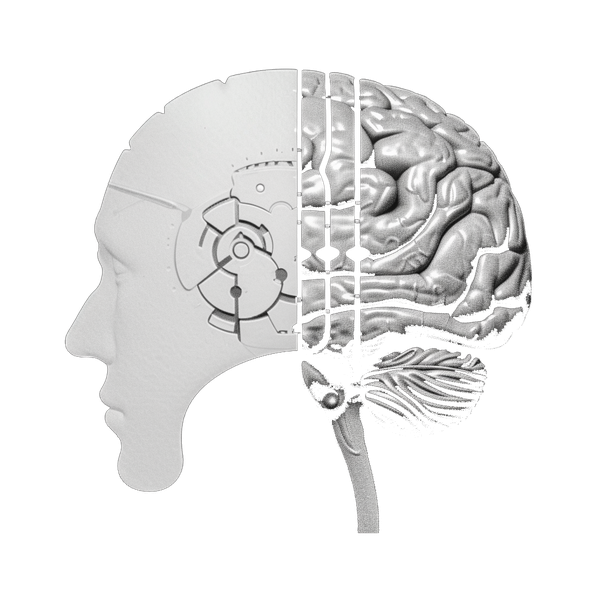

The information society continues to evolve and transform the world we live in. So that no one is excluded, we must guarantee the fundamental right to the Technology that underpins it.
Digital technology has not only generated the Fourth Industrial Revolution but has transformed it into a knowledge revolution. Easy access to and acquisition of these technologies have made them a fundamental tool of the new economy, used as a means to improve productivity and competitiveness. However, while they can be an enabler for access to the information society, they can also become a source of exclusion for part of the population.
Technology must be valued as a clear sign of social progress. A more technified society is, without a doubt, a more developed society. But technological and social progress is revealing inequalities in what has come to be known as the “digital divide”, or social distance in the access to, use and acquisition of digital technologies at the geographic, socioeconomic, cultural and gender levels. It refers not only to the quality of infrastructure, devices and connections, but also to the ability to turn accessible information into relevant knowledge.
2020 is the beginning of the greatest Technological Transformation in the history of humanity. Never before had such a volume of innovations been produced continuously and concurrently. It is the beginning of the Fourth Digital Transformation and the Fourth Industrial Revolution and of all the Emerging Technologies that come with them.
These innovations are appearing at a pace that far exceeds our capacity to assimilate them individually, even for those with a high level of technological knowledge. A notable inequality is being created in the different levels of adoption among people, not only because of generational differences or differences in purchasing power, but also because of the difficulty of accessing the right information in such an advanced and complex technological context.

Many people, even when they have access to Digital Technologies, do not know how to use them or integrate them into their daily lives to meet their needs. This depends on different levels of literacy and technological capability. Only a small percentage of the world’s population has benefited from the advantages of technology, and only a few have access to the full range of services it offers.
We must therefore try to reduce the inequalities in the impact of Technology among citizens, favoring not only greater access and acquisition, but also greater knowledge through qualified training. This access to information and knowledge has become an indispensable tool for human beings to evolve toward better levels of economic and social development, so promoting equality and driving TecnoEducación (Techno-Education) means progress toward a more balanced and fair world.
Therefore, digitalization, or the reduction of the digital divide, must be measured not only in terms of the number of devices and network resources, but also in terms of adequate options, facilities and costs for access to the network and to training and education programs that make it possible to optimize the use of the installed infrastructure. These training cycles must help the new TecnoCiudadano (Techno-Citizen) apply the acquired knowledge to the needs that improve quality of life in their cultural and social environment.
In addition, in parallel with the Fourth Industrial Revolution and the development of the Knowledge Society, we are also already immersed in the Second Cognitive Revolution, characterized mainly by opening up hidden horizons, such as the discovery of unknown mental states and the achievement, dreamed of for so many centuries, of immortality. That is why some world-renowned transhumanists such as Ray Kurzweil go so far as to claim that the first immortal superhumans are walking among us today. Meanwhile, Artificial Intelligence is plunging us into the Second Machine Age, which will bring about the most important transformation of social, labor, economic and political organization ever known.

Our way of thinking, of living and of relating to what surrounds us will change completely. It is global, it affects all of us directly or indirectly and, without any doubt, there is no turning back.
This new TecnoSociedad (Techno-Society) has brought us instant, omnipresent, ubiquitous, interoperable and multidisciplinary access to Knowledge and Information, which can only be reached through a Digital Connection and is disseminated only through Digital Media. This phenomenon is no accident; it is the fruit of our capacity to develop as a civilization. Nor is it compartmentalized or elitist, since one of its main characteristics is freedom and plurality.
But like any other significant advance in the history of civilization, it has its downside: the risk of exclusion, the danger of dividing those who can access this new social paradigm comfortably and quickly from those sectors of the population who cannot and therefore remain outside this innovation, this new way of understanding life, this new reality, the future.
Therefore, so that no one is excluded, we must guarantee the fundamental right to the Technology that underpins this New Reality. Both the Second Cognitive Revolution and the Second Machine Age, which form the basis of this Knowledge Society, must be centered on serving people, so it will be indispensable to have universal ACCESS to Digital Technology, on EQUAL terms at the geographic, socioeconomic, cultural and gender levels, and with an equitable capacity for ACQUISITION for the different social levels.
Originally published in Spanish on IANética (2020). English version prepared for TecnoHumanismo.
Related articles
The Right to the Integrity of Being in the Age of Neurotechnology and Cyborgization
Neurotechnology and cyborgization promise advances in medicine and communication, but raise ethical challenges for autonomy, privacy and human integrity.
Read article →6 min

The Right to the Supremacy of the Human Being over the Machine
The Machine must always serve the Human Being. Defending our right to supremacy must be one of the main goals of the 21st century.
Read article →4 min

The Right to Digital Security and Ethical Hacking
Digital security is deeply tied to people: how online behaviour and information security are regulated has major implications for privacy and human rights.
Read article →7 min