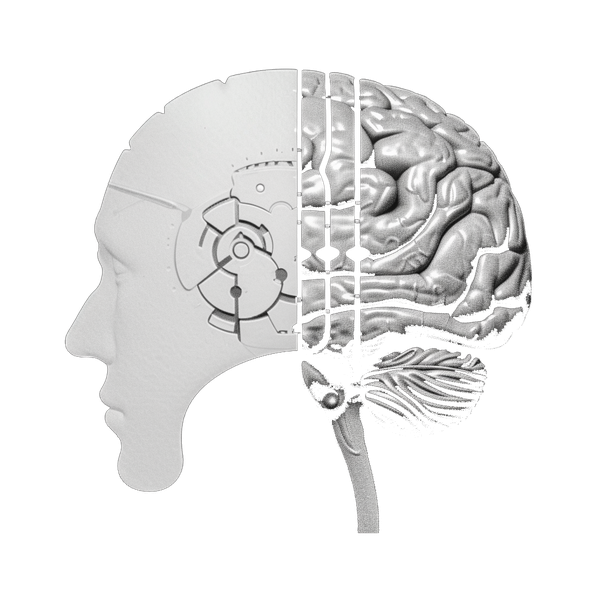

The Internet of Everything was included by Gartner as one of the main trends of 2015. The term Internet of Everything (IoE) is fairly new, and there is some confusion about the difference between the Internet of Everything (IoE) and the Internet of Things (IoT), so let’s explore the future of this new concept.
The Internet of Everything (IoE) is the intelligent connection of people, processes, data and things. It makes networked connections more relevant and valuable than ever, turning information into actions that create new capabilities, richer experiences and unprecedented economic opportunities for businesses, people and countries.
The Internet of Everything (IoE) describes a world where billions of objects have sensors to detect, measure and assess their status; all connected through public or private networks using standard and proprietary protocols.
Pillars of the Internet of Everything (IoE)
People : connecting people in more relevant and valuable ways.
Data: turning data into intelligence to make better decisions.
Process: Delivering the right information to the right person (or machine) at the right time.
Things: physical devices and objects connected to the Internet and to each other for intelligent decision-making; often called the Internet of Things (IoT).
Because in the Internet of Things all communications take place between machines, IoT and M2M are sometimes considered synonyms. The broader concept of IoE includes, in addition to M2M communications, machine-to-people (M2P) and technology-assisted people-to-people (P2P) interactions. The Internet of Everything (IoE) is a concept that extends the Internet of Things (IoT)’s emphasis on machine-to-machine (M2M) communications to describe a more complex system that also encompasses people and processes.
Internet of Things (IoT)
The Internet of Things (IoT) is the network of physical objects that are accessed through the Internet. These objects contain embedded technology to interact with internal states or the external environment. In other words, when objects can “sense” and communicate, it changes how and where decisions are made and who makes them. For example, Nest thermostats.
In Industry 4.0, the interconnected objects of the IoT are called cyber-physical systems when they have computronic capability, that is, they can store sensor data and operate on it locally, and they also possess some kind of Artificial Intelligence plus Hyperconnectivity capability through wide-bandwidth networks such as 5G, to have coverage almost anywhere on the planet and real-time communication.
The Internet of Things, in its broadest conceptualization, includes any kind of physical or virtual object or entity that can be made addressable and that has the ability to transmit data without human-to-machine input; those are the things in the IoT. Things are usually items that would not have been networked in the past; the automation of the communications of things is also fundamental to the concept of the IoT. IoE, on the other hand, also includes user-generated communications and interactions associated with the global totality of networked devices.
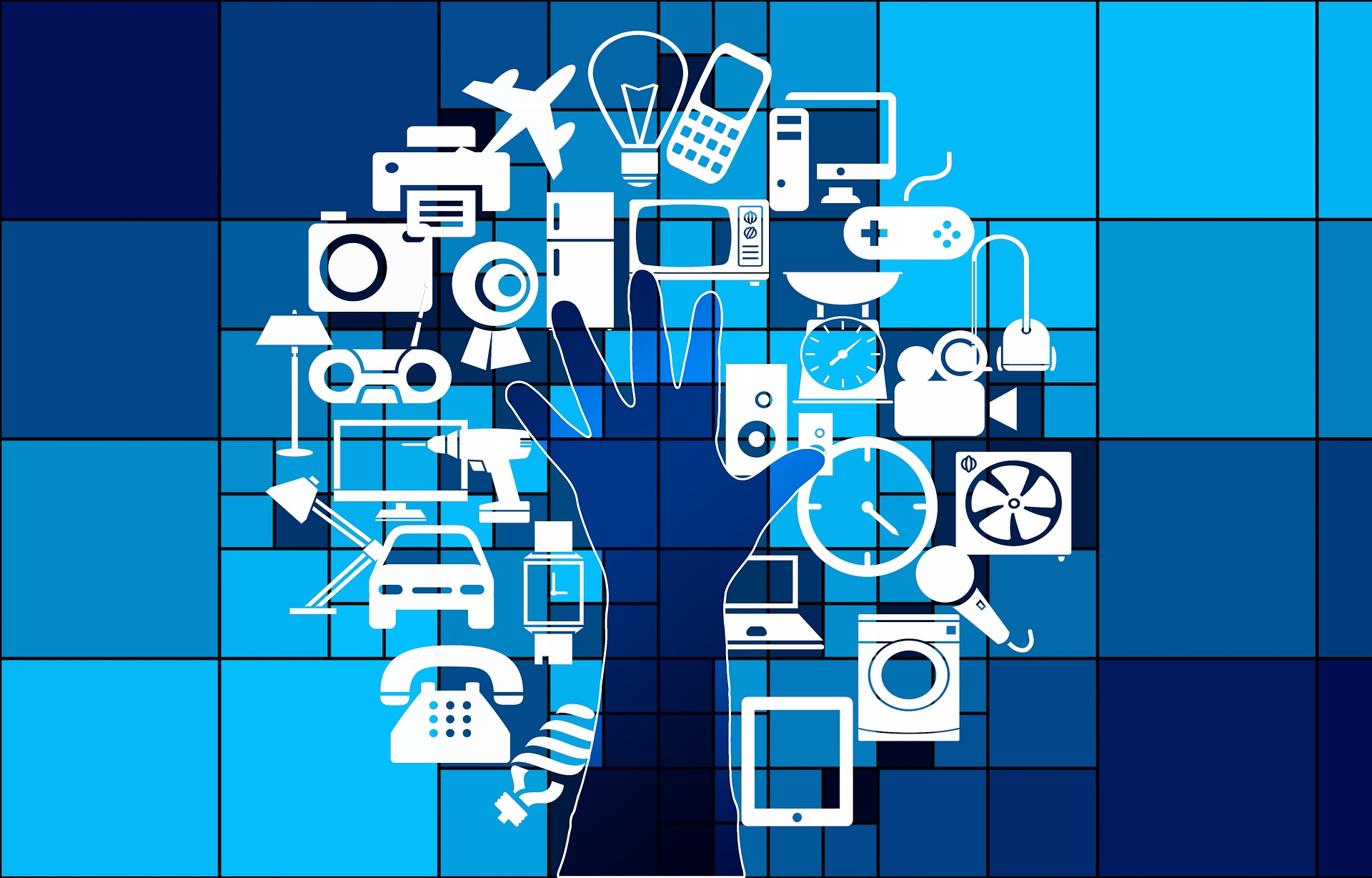
The Difference between IoE and IoT
The Internet of Everything (IoE), with four pillars: people, processes, data and things, builds on the Internet of Things (IoT), with a single pillar: things. Moreover, IoE further boosts the power of the Internet to improve business and industry outcomes and, ultimately, to improve people’s lives by contributing to the progress of the IoT. In explaining the relationship between IoE and IoT, Cisco states: “The Internet of Everything builds on the foundation of the Internet of Things by adding network intelligence that allows convergence, orchestration and visibility across previously disparate systems”.
Let’s look at a real-life use case that explains the Internet of Everything versus the Internet of Things: “The Internet of Everything connects the separate concepts into a cohesive whole. It is not just about letting devices communicate with each other; it is about allowing everything to talk to everything else. An analogy that sheds light is to view the Internet of Things of a smart highway, where there would be sensorization and cyber-physical systems in everything that makes it up, including lanes, signals and connections. In this case, the highway’s Internet of Everything would include its Internet of Things, plus all the vehicles that travel on it, people, autonomous traffic agents, weather conditions, etc.”
THE FUTURE?
The Internet of Everything is going to reinvent Industry 4.0 on three levels : business processes, business model, and the business moment.
“At the first level, digital technology is improving our products, services and processes , the experiences of our customers and constituents, and the way we work in our organizations and within our partnerships,” said Hung Le Hong , research vice president and Gartner Fellow: “We do what we normally do, but digitalization allows us to do it better or to develop better products within our industry”.
As companies digitalize products and processes, new ways of doing business in industries emerge. More transformative changes are expected as digitalization reinvents industries at the business-model level. We can see it in Nike, which is playing at the forefront of the health industry with its connected sportswear and equipment, and in Google, which has a visible presence in autonomous vehicles. “These organizations had no business in their industry and now they are reinventing them,” said Le Hong.
The third level of digital reinvention is created by the need to compete with unprecedented business speed and agility. Gartner calls this the “business moment”.
The Internet of Everything will create tens of millions of new objects and sensors, all generating data in real time. “Data is money ,” said Nick Jones, research vice president and Distinguished Analyst at Gartner. “Companies will need large amounts of data, or Big Data, and storage technologies to collect, analyze and store this great volume of information. Moreover, to turn data into money, business and IT leaders will have to make decisions. Since they will not have the time or the capacity to make all the decisions themselves, they will need processing power.”
“Now that digital is built into everything we do, every business needs its own digital strategy,” said Dave Aron, research vice president and Gartner Fellow. “Digital is not an option, nor an add-on, nor an afterthought; it is the new reality that requires comprehensive digital leadership.”
Gartner predicts that businesses will make extensive use of IoE technology and a wide range of products will be sold in various markets. These will include advanced medical devices, factory automation sensors and applications in industrial robotics, fleets of sensors for higher agricultural yields, and automotive sensors and infrastructure integrity monitoring systems for areas such as road and rail transport, water distribution and electricity transmission; in short, an endless list of products and services.
But as devices become more connected and collect more data, privacy and security concerns will also increase. The way companies decide to balance customer privacy with this great amount of IoE data will be crucial.
Originally published in Spanish on IANética (2020). English version prepared for TecnoHumanismo.
Related articles

Artificial Intelligence in Education
The AI revolution has reached the education system, and the classrooms of the future will adapt to new technologies that benefit personalised learning.
Read article →3 min
What Is Technohumanism
Technohumanism unites Thought and Technology, applying the ideas of the Human Disciplines to the emerging technologies of the Fourth Industrial Revolution.
Read article →2 min

Education 4.0: What Will Change with Artificial Intelligence and Extended Reality in the Classroom
Education 4.0 is a revolution in traditional educational models. It is not about advanced schools and their technology: the change is essential and urgent.
Read article →5 min