
Amazon’s Jeff Bezos has said he is not too worried about the potential threats of AI. Other visionaries such as Elon Musk, Bill Gates and the late physicist Stephen Hawking have voiced their views on the potential dangers of AI.
In January 2015, Hawking, Musk and other Artificial Intelligence experts signed an open letter on research in the field of AI, calling for closer scrutiny of its potential effects on society. The twelve-page document is titled “Research Priorities for Robust and Beneficial Artificial Intelligence: An Open Letter”, and it advocates strong research on creating new laws on artificial intelligence, developing associated ethics and regulation, safeguarding privacy and other concerns.
As the letter describes, the potential threats of Artificial Intelligence fall along multiple dimensions. The good news is that the early stages of AI, in which we find ourselves, are malleable. Therefore, the future is ours to steer in the right direction; it is now that we must direct our efforts toward researching and developing aspects that have less to do with engineering and more to do with ethics and, as a consequence, with policy around AI.
Stephen Hawking made sure the world knew his concerns about AI before he died. At a time when Artificial General Intelligence is called “humanity’s last invention”, these concerns are not mere unfounded attention-seeking statements. They are preventive appeals to get things right while there is still time. Nobody knows for certain how far away Artificial General Intelligence is, but we do know that AI is improving. Even if General AI never arrived, there are many reasons why we should be concerned about the advance of narrow AI.
And what if there is a middle ground between the narrow and the general? It is perfectly possible that future AI systems will become more robust at generalizing problem-solving ability without becoming fully conscious. We saw this in June 2020 with OpenAI’s GPT-3, considered the first generalist model, with 175 billion parameters, and whose training included all of Wikipedia and practically every public document of human knowledge in almost every scientific discipline. This new model is capable of writing books, articles and scripts, of designing, programming and countless other tasks; we have been researching it for less than two months and it has left its creators perplexed, among them Elon Musk.
Let us now look at some of the opinions and warnings of today’s tech industry leaders. These people are not only intelligent and forward-looking, they have also been leading the progress of technology and Artificial Intelligence research. Their concerns are not new, but they have certainly got the media to echo the possible dystopian scenarios of AI.
1. Companies must self-regulate their Artificial Intelligence technologies.
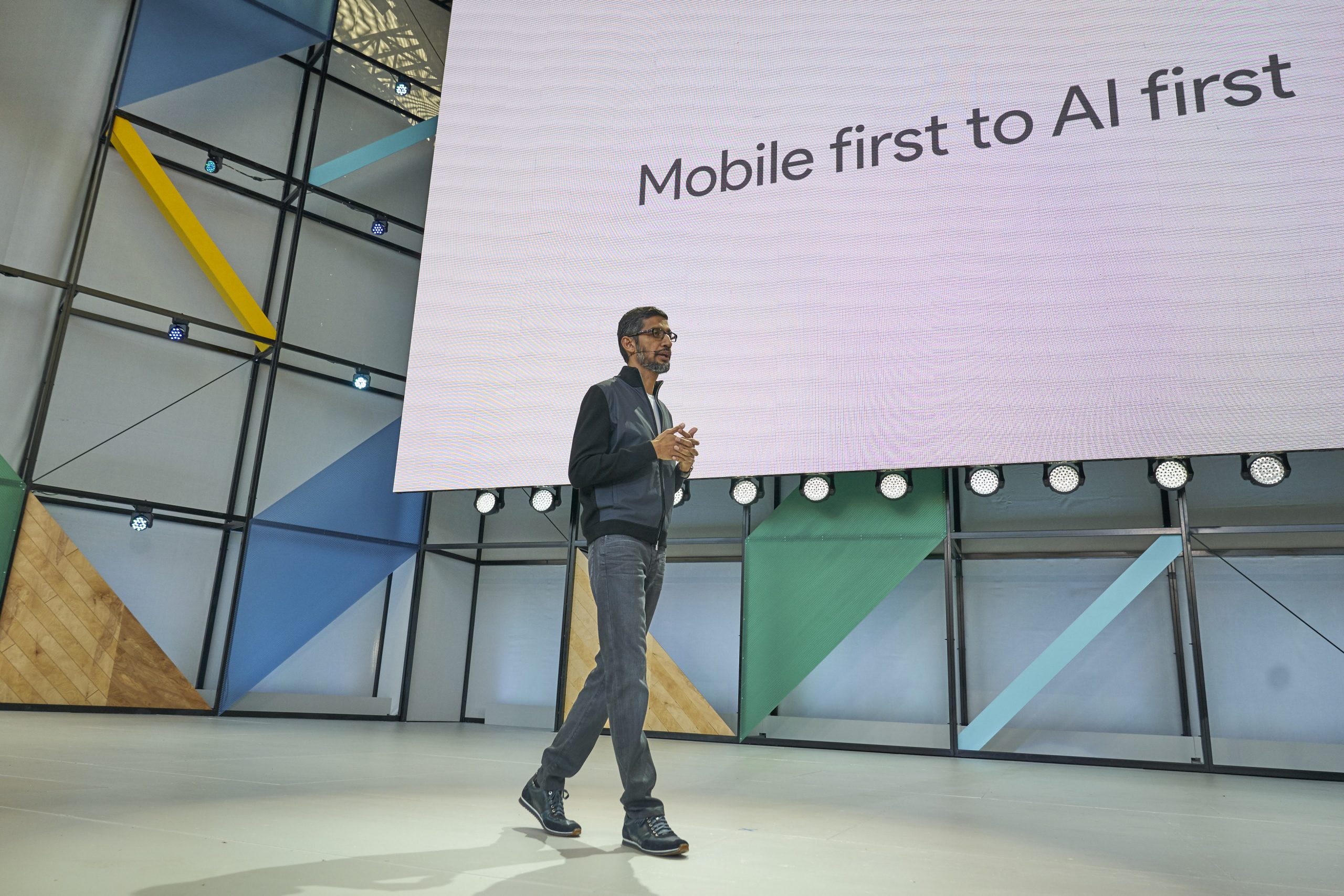
Google’s current CEO, Sundar Pichai, said that fears about AI are “very legitimate”. Although tremendously techno-optimistic, Pichai always insists that leading technology companies must establish ethical guidelines and other safety measures when deploying AI systems. Google has set an example by canceling a multimillion-dollar deal with the Pentagon, after a protest by senior employees denounced how dangerous it is to sell advanced Artificial Intelligence technology for weapons use.
The hope is that the leading technology companies can implement systems that minimize the potential negative impact of their technologies. Pichai believes these companies will be able to regulate themselves. This is consistent with Google’s Artificial Intelligence principles, published in June 2018. Some of the points set out in the open letter are that AI-based technology must be socially beneficial and extensively tested. The document also lists the areas where Google will not apply its AI technologies, such as surveillance, weapons or anything that violates international law.
2. Artificial Intelligence could start a new global arms race.
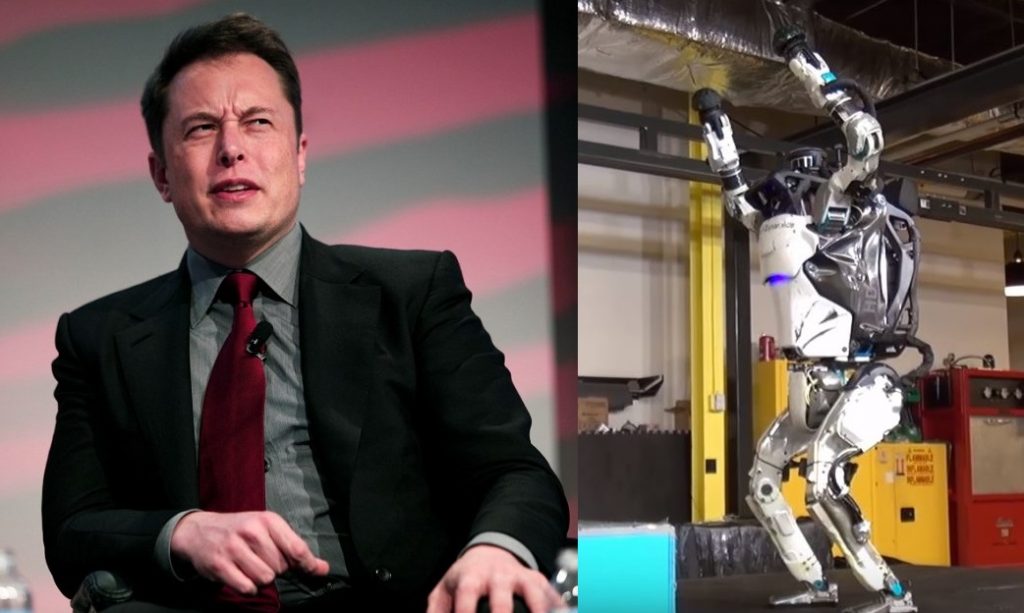
Elon Musk, founder of Tesla, SpaceX, Neuralink, Starlink and the OpenAI initiative, has been openly against the weaponization of AI. Artificial Intelligence not only has the potential to create devastating weapons, it would also trigger a global arms race among nations. Musk believes it is inevitable that AI will be used as a weapon, but that it should not be.
Together with other industry leaders, he signed a petition addressed to the UN Convention on Certain Conventional Weapons that demands a ban on autonomous weapons with AI capabilities. The very creation of these weapons must be regulated like any other unconventional weapon of war. Musk also said he sees the threat of AI weapons as much worse than that of nuclear weapons. As soon as they are developed, AI weapons will have the potential to fall into the hands of oppressive states or terrorists. It would be opening Pandora’s box.
3. Artificial intelligence may not be aligned with our goals.
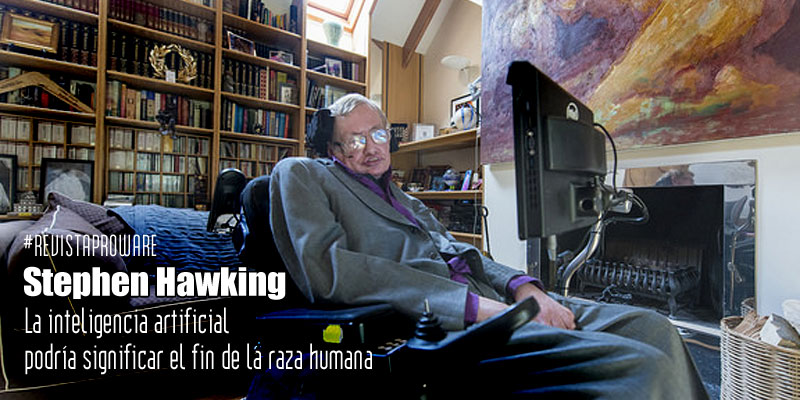
The physicist Stephen Hawking was not afraid to express his views on the existential threat of Artificial Superintelligence. He believed that once an Artificial Intelligence system became more intelligent than its creators, it might decide that its goals differ from those of humanity. This would trigger, as Hawking put it, “the end of the human race”.
Instead of blindly accelerating the pace of AI research, Hawking implored industry members to proceed with care, making sure that the right safety measures were put in place at every step of the process. If this is not done, there would be no guarantee that the AI system would respect our way of life.
At the same time, Hawking acknowledged the potential of that AI to produce enormous benefits for the human race. For him, if Superintelligence emerged from Artificial General Intelligence, the ideal scenario would be for it to decide to work in our favor, and the only way to achieve this goal is to introduce safeguards and prepare for the worst-case scenarios. In short, to create an ethics for machines.
4. We don’t know how to control Artificial Intelligence.
Should a machine with Artificial General Intelligence be created, it would very likely try to modify its own code to become even more intelligent. This is known as an intelligence explosion, and it would trigger the emergence of Superintelligence. Stephen Hawking and Bill Gates insisted strongly that this Superintelligence would be catastrophic and poses the greatest of threats.
Bill Gates shares the same alarmist thinking behind the rhetoric of Hawking and Musk: “I don’t understand why people are not concerned”. However, he also firmly believes that technology companies will be extremely careful when researching Artificial General Intelligence, since this kind of system could quickly slip out of our control. Gates declares with conviction that humanity will harness the power of Artificial General Intelligence rather than be destroyed by it.
Hawking, however, believed that a super-intelligent AI system would not be able to be contained for long. That is, we simply will not know how to control that level of intelligence, since today we do not know what kind of systems it will derive from or how to prevent it. But if we did know, it is likely that with careful engineering it could be contained.
Elon Musk recently referred to super-intelligent AI as an “immortal dictator”. It is hard to imagine what kind of power such a system would have, especially if there are no safeguards on how it can access financial networks, weapons systems and the power grid.
5. Artificial intelligence will increase inequality.
Stephen Hawking was the one who observed that the current trend of technology was to create “ever-increasing inequality”. This means there is an enormous and growing gap between different places in terms of concentration of wealth, technological investment, digital education and economic mobility. The advance of AI, whether general, narrow or somewhere in between, will only accelerate this divide. The only way to stop this trend will be through the development of human-centered policies for the regulation of AI and the automation of work.
Many, like Elon Musk, have hypothesized that the next leap in the evolution of intelligence will come not from pure machines, but from a symbiosis between Computers, Artificial Intelligence and Humans. Musk already believes that anyone with a smartphone is a cyborg. The smartphone opens many avenues for augmenting people’s intelligence through a direct connection to the Internet, and thanks to 5G this will likely happen in real time and from anywhere on the planet. It is also quite possible that in the future these devices will be integrated directly into the human being, bio-implanted in a process called progressive cyborgization. This creates a new type of human, the augmented humans or transhumans.
The question is, who will be augmented and who will not? Today, smartphone penetration is high even in developing countries, but that is because prices have fallen dramatically in recent years. Yet nothing suggests that the same will happen with Augmentation Technologies. This raises countless questions about the ethics of the concentration of wealth and the boosting of intelligence through commercial products. When these technologies start to appear, those with high purchasing power will be the ones to get immediate access, leaving poorer populations exponentially behind.
Originally published in Spanish on IANética (2020). English version prepared for TecnoHumanismo.
Related articles
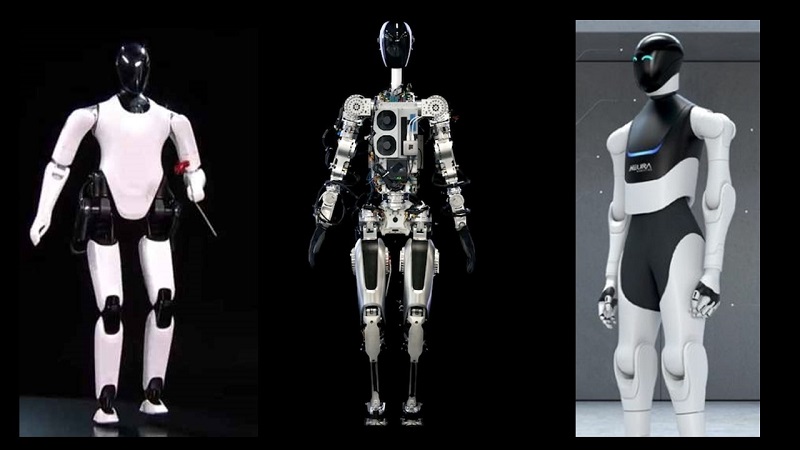
Ethics of Advanced Robotics and Humanoids
As advanced robotics and humanoids take hold, an essential debate on ethics emerges: how to integrate AI into robots while protecting human dignity.
Read article →6 min
Technology and Individualism: The Right to Remain Human
Rising depression, loneliness and child and youth suicide are multifactorial, but technology is one of their main drivers in recent years.
Read article →4 min
The 7 European Rules for Developing Trustworthy Artificial Intelligence
Europe will focus on technology that benefits people, a fair and competitive economy, and an open, democratic and sustainable society.
Read article →7 min