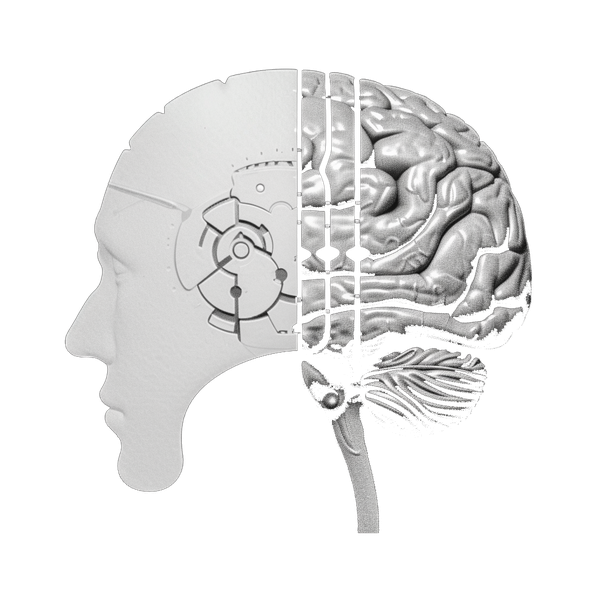

The history of humanity can be written as an attempt to attain its own freedom. The myth of Prometheus already frames it this way when it portrays the Titan stealing fire from the gods in order to give it to helpless humans.
In the Renaissance, Pico della Mirandola wrote the Oration on the Dignity of Man (Discurso sobre la dignidad del hombre), in which he argued that, even though human beings were divine creations, there was no conceived plan or predetermined idea of what they should be. On the contrary, depending on their behaviour and the abilities they cultivated, they could become anything. The Enlightenment was described by Kant as a movement whose aim was to enable people to guide themselves in life without needing the understanding of another. In the 20th century, atheist existentialists such as Sartre dissolved the relationship between a creator and the human species, asserting that human beings were only what they made of themselves.
Today, transhumanist thought could be considered the continuation of this narrative. This philosophical movement, whose founding has been attributed to Max More, David Pearce and Nick Bostrom, promotes the possibility of enhancing human beings through technology. Not simply curing diseases or repairing injured organs, but expanding people’s capacities with the aim of making them immune to certain ills, prolonging their lives indefinitely, or equipping them with devices that extend their natural senses. The case of Neil Harbisson is famous: thanks to a receiver connected to his brain, he is able to perceive colours outside the human spectrum. Neuralink, Elon Musk’s company and its brain implant project, could also be considered a clear example of this.
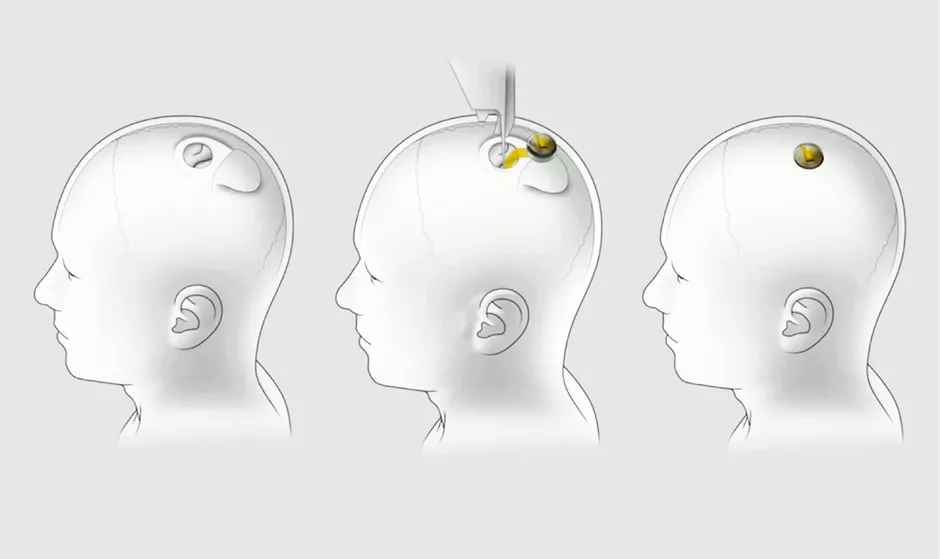
At first sight, there seems to be no contradiction between the Promethean spirit and transhumanist ideas. We will be whatever we wish to be and, truly, we will be whatever we make of ourselves through science and technology. However, a glance at the thought of Ortega y Gasset can help us find some difficulties in fitting it into the story of the great human emancipation.
For José Ortega y Gasset the human condition was, precisely, that of always being a project to oneself. That is, human life differed from the rest in that we people have the capacity to imagine what we would like to be and, on the basis of this idea created by ourselves, we generate a life project. That is why we are always unfinished beings, since our life is, at every moment, the attempt to be something different from what we are.
But what is really important about this is that such a project is an individual responsibility. Life belongs to each of us. It is our own and cannot be transferred. We cannot make someone else live our life, nor can we shift our responsibility onto parties outside ourselves. Even when we give our freedom to someone or when we swear obedience to a code, that will have been a decision of our own.
“Man, every man, has to decide at every instant what he is going to be in the next. This decision cannot be transferred: no one can replace me in the task of deciding myself, of deciding my life. When I put myself in another’s hands, it is I who have decided, and who keep deciding, that he should direct me: I do not transfer the decision, then, but only its mechanism.”
This idea, which may even seem a statement of the obvious, clashes with what Antonio Diéguez, in his book Transhumanismo, calls the “imperative of enhancement.” According to this idea, arguments against can do little to stop the possibility, imagined by us, of prolonging our lives, overcoming incurable diseases or expanding our cognitive and mental capacities. In time, the mere possibility of this being within our reach will be enough for it to end up happening. It is inevitable that, as a species, we human beings will end up being something different from what we are.
However, the story of human emancipation breaks down at this point. And it does so because we would still have to decide what we want to be. Will it be necessary and mandatory to have constant access to the internet through bionic implants? Will we need certain biotechnological enhancements in order to gain access to particular social positions? Will there be a social security system that covers the minimum enhancements that all human beings must receive? And, more importantly, who will decide all these questions? Perhaps governments will, perhaps it will be done democratically, or perhaps a team of experts will decide what the human being is to be from a certain moment on.
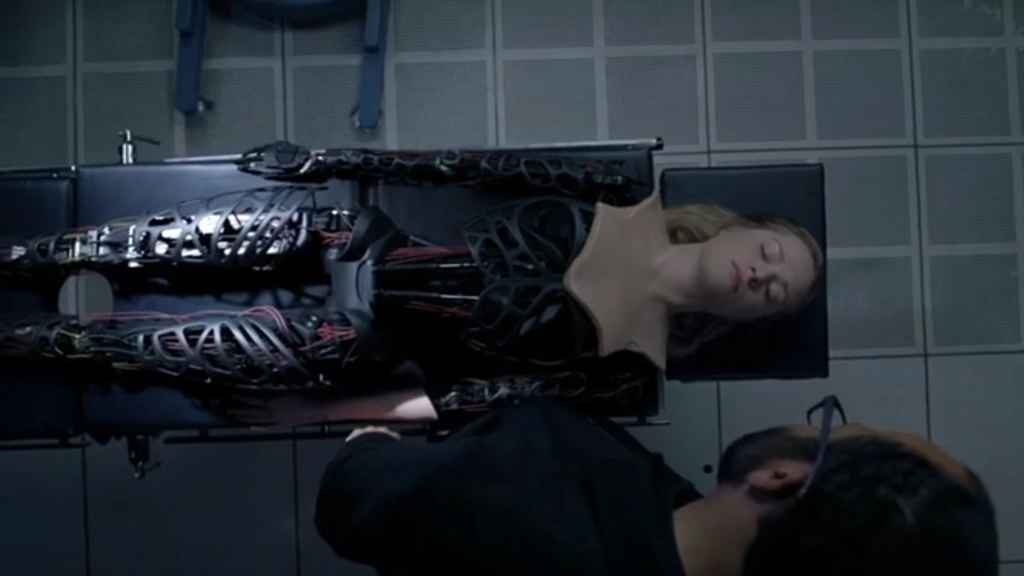
And this is where the problem lies. Because if the history of humanity is the story of how individuals became ever freer, the chapter of transhumanism may turn out to be the definitive “plot twist” of the narrative. Each person’s individual project may become a mere footnote to their own life, or even disappear altogether. If an idea of what we must all be is constructed, if a project is drawn up to which we must all aspire, human freedom may be no more than an appearance, or little more than a tale in which to place our desperate faith.
If all our aspirations are to possess certain enhancements because our capacities and thoughts depend on them, if there is no longer room to have an idea of our own of what we want to be, if the values that guide our choices lie no further than technological possibilities, our capacity to choose will have ended and, with it, human life as Ortega described it. What is more, if the only requirement for implementing enhancements in our bodies is that it be possible to do so, and our capacities, reasoning and decisions depend on them, then a moment could come when our life is truly lived by someone else.
Originally published in Spanish on IANética (2020). English version prepared for TecnoHumanismo.
Related articles
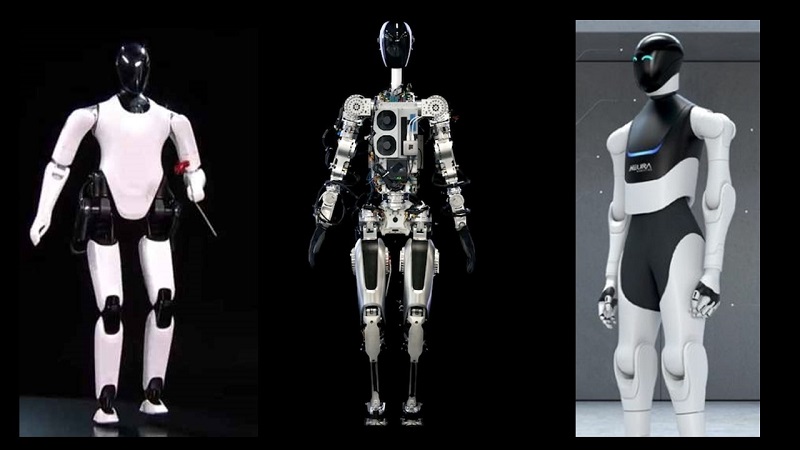
Ethics of Advanced Robotics and Humanoids
As advanced robotics and humanoids take hold, an essential debate on ethics emerges: how to integrate AI into robots while protecting human dignity.
Read article →6 min
Technology and Individualism: The Right to Remain Human
Rising depression, loneliness and child and youth suicide are multifactorial, but technology is one of their main drivers in recent years.
Read article →4 min
The 7 European Rules for Developing Trustworthy Artificial Intelligence
Europe will focus on technology that benefits people, a fair and competitive economy, and an open, democratic and sustainable society.
Read article →7 min