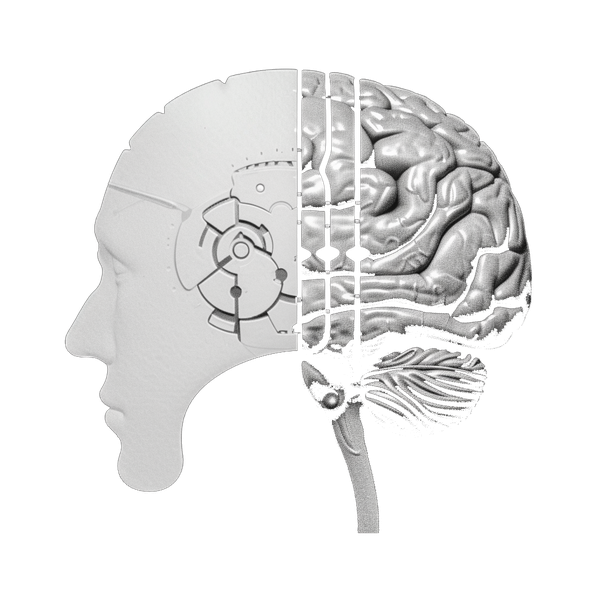

Interview for the master’s program in documentary journalism at UNTREF in Buenos Aires, on Digital Minimalism in Communication and Content Creation, and its important correlations with Technohumanism.
UNTREF: In a nutshell, those who preach “digital minimalism” hold that the key to living well in a high-tech world is to spend much less time using it. It is a philosophy that acknowledges the current state of affairs and proposes a course of action for the future. Do you agree?
Pedro: I partly agree. I would distinguish between use and abuse, and within abuse, between doing it consciously or unconsciously.
Digital technology is necessary and defines our current world. Well used, it has enormous benefits, so I do not think it is a matter of reducing usage time across the board. Each case will need to be studied. For example, in my situation I use it intensively because it is my profession: a great deal of the knowledge and information I handle comes from the digital medium, and I spend a lot of time researching, coding, reading and writing. In my case, I use it in a way that, to a large extent, gives me the life I have, which for me is the best I have had so far.
Then there is abuse. There are already many studies on digital addiction, especially among young people and the time they spend on social networks. Most of these cases are induced by the attention market: the predictability of the mind has been sought, and many unconscious behavioral mechanisms have been studied in order to keep users hooked for as long as possible, while they do practically nothing, simply attending to the constant flow of digital noise like zombies trapped on a repetitive carousel that they perceive as an infinite universe full of possibilities.
In this second case I advocate for Technohumanism and Tecnoeducación (Techno-Education): on the one hand I would regulate these dark designs created in Silicon Valley, encouraging a change in the current situation. And on the other I would re-educate in the good use of technology everyone who has developed unconscious patterns and is digitally addicted. To this type of user I would indeed strongly recommend a “digital minimalism” and a radical reduction of their misuse of technology.
The problem is that we have the big digital corporations against us. A difficult task lies on the horizon. 😉

UNTREF: We know today that the big platforms and video games are specifically designed to be profitable by fostering the addiction of users who spend so much time trapped in screens. Could the media and influencers help raise awareness about the use of technology if they use the very same platforms that cause the addiction?
Pedro: Well, that question is leading, hahahahaha. You started by asserting that this is so and then asked the question. I might not have agreed with the claim that the design fosters addiction. But in this case I do believe that social networks in particular have been designed that way. As for video games, also, but they have a longer and more complex history. Besides, since they are leisure, there is a thin ethical line, because play itself has carried a certain addictive dose since ancient times and has always been present in our civilization.
Regarding the question, I do not think the Media and Influencers should bear the responsibility of raising awareness. That belongs to governance, in its Citizen Education plans. But if some media outlet or influencer wants to raise awareness, I do not see why they cannot use the same platforms; in fact it would be acting from within the tool to educate about the tool. That seems appropriate to me.
UNTREF: Cal Newport, author of the book Digital Minimalism, cites studies showing a considerable increase over the last decade in anxiety and depression disorders among teenagers addicted to smartphones, and argues that in a few years giving a cell phone to a 13-year-old will be considered similar to giving them a pack of cigarettes. Do you think we are really heading that way? What measures could we take?
Pedro: Yes, there are numerous studies showing that a dark design has indeed been used that plays on addiction, dopamine, attention, completeness and many other mechanisms of the mind. The goal pursued has been to keep the user for as long as possible, since business models, especially advertising ones, demand it. Pathological disorders are only now beginning to appear, such as FOMO (Fear of Missing Out) and we are also seeing that they affect not only behavior and conduct but even brain physiology, such as a weakening of the orbitofrontal cortex, where the long-term decisions most associated with serotonin are made, in favor of greater activity and strengthening of the nucleus accumbens and the striatum, which prioritize instant gratification and the production of dopamine spikes.
It is hard to know how to reverse this situation. There are already Silicon Valley executives, fully repentant, who are driving ethical initiatives to raise awareness inside corporations, and the companies themselves are creating ethics working groups that include profiles such as sociologists and philosophers to try to channel this issue. There are also projects to develop people-centered technology that are beginning to work in Europe, which is leading the Technohumanist movement and the creation of a Normative Ethics in the development of the Digital Society. The first measure, as I said, is re-education, and in time let us hope it ends up being regulated and that, as you have pointed out, what is done to teenagers strikes us as an atrocity, by exposing them to such an addictive activity just when their brains are beginning to form.

UNTREF: Just as today we talk about healthy food or mindful eating, will we talk about human, healthy or conscious technology?
Pedro: I have no doubt. It should have been that way: Google began with its motto Don’t Be Evil, and the market made it abandon it in order to remain competitive. The basis of Technohumanist thought is to redirect bad practices through Ethics and Education. In this transition phase I see nothing wrong with marking that difference by talking about Conscious Technology or Ethical Technology, as already happens with Cyberethical Systems, but in the long term the difference should disappear, since the whole Digital Society should follow the path of Ethics and Humanism. We will not need to use those adjectives.
UNTREF: Why, in the era when it is easiest to communicate, is it harder for us to listen to others, and are we losing human contact? Is there also an addiction to distraction? Do we really need constant connectivity to live?
Pedro: At Stanford the Persuasive Lab was created, whose main line of research is captology, or the art of capturing the user’s attention, whether they like it or not.
These laboratory techniques have plunged us into an endless digital adolescence. Our gregarious society is very given to comparison and to performance indicators (points, levels, rankings). The digital environment fosters an illusory protection that isolates us and sets us apart from real life. Competition without real consequences forms a bubble of satisfaction that reinforces the idea that the digital world is more satisfying than the real world around us. Hence its enormous attraction, and that is what the Persuasive Lab works on.
This bubble of isolation is what distances us from the real world: young people prefer digital communication to direct communication, going so far as to claim that the legitimate way to meet people is on Apps. They do it no other way; they have lost the social capacity for direct, spontaneous contact and need the protection that the digital medium gives them.
The addiction to distraction is created by the new digital capitalism, which is both a product and a producer of generalized acceleration. It tries to increase the productivity of time in order to extract more value from it. Once space has been reduced, time has to be expanded by compressing it, to create an instant and infinite moment. Acceleration has replaced habit with attention and satisfaction with addiction. Algorithms are the production tools of this attention economy, and they are designed to keep us connected to the digital world for as long as possible and totally absorbed in it and distracted from the real world.
In conclusion, and from an absolutely Technohumanist approach, we do NOT need constant connectivity to live; what is more, being Always ON is NOT living humanly. We must re-educate ourselves and create a new TecnoAntropoCentrismo (Techno-Anthropocentrism) that recovers the true values of the Human Being, in a Second Renaissance where Technology is the one that puts itself at our service, and not as it is now, where most of us inhabitants of cyberspace have become slaves of the digital medium.
Originally published in Spanish on IANética (2020). English version prepared for TecnoHumanismo.
Related articles
Internet of Everything
Gartner named the Internet of Everything a top 2015 trend. How does IoE differ from the Internet of Things (IoT)? Let's explore its future.
Read article →5 min

Artificial Intelligence in Education
The AI revolution has reached the education system, and the classrooms of the future will adapt to new technologies that benefit personalised learning.
Read article →3 min
What Is Technohumanism
Technohumanism unites Thought and Technology, applying the ideas of the Human Disciplines to the emerging technologies of the Fourth Industrial Revolution.
Read article →2 min