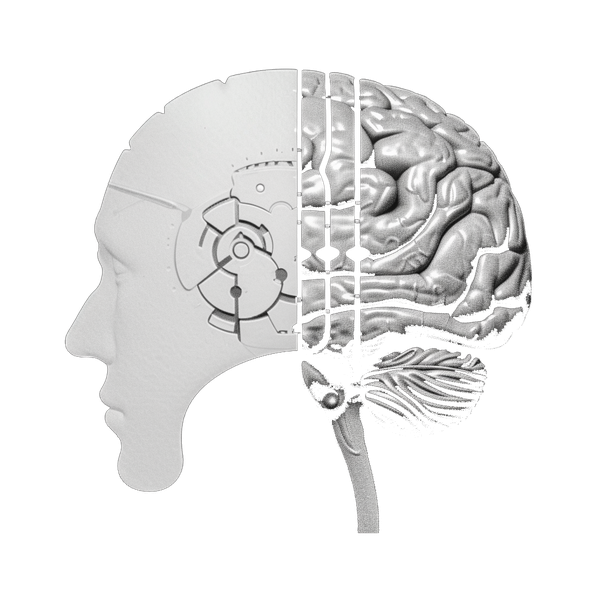

The Artificial Intelligence revolution has reached the education system too, and the classrooms of the future will adapt to new technologies that will benefit personalised learning.
The systematic integration of Artificial Intelligence in Education has the potential to address some of the greatest challenges of today’s world: developing innovative teaching and learning practices, harnessing the potential of AI with a human-centred approach, refocusing the debate on tackling current inequalities in access to knowledge, research and the diversity of cultural expressions, and above all making sure that AI does not widen technological gaps between countries and within them.
These are the aims of achieving «AI for All», where every person can take part in the current Technological Revolution and access its benefits, chiefly in terms of innovation and knowledge. The deployment of AI in Education must enhance human capabilities and the protection of fundamental rights in order to achieve an effective collaboration between humans and machines in life, learning and work, as well as in support of sustainable development.
We are entering an era in which Artificial Intelligence, and its convergence with the other emerging technologies, such as Extended Reality, Online Teaching, Educational Robotics, Intelligent Tutoring or Adaptive Personalised Learning, will energise the education sector as never before and will transform every aspect of our lives. We must steer this New Teaching with Hyper-Intelligent Machines from a Technohumanist approach and with the aim of improving livelihoods, reducing inequalities and promoting a fair and inclusive Globalisation of Education.
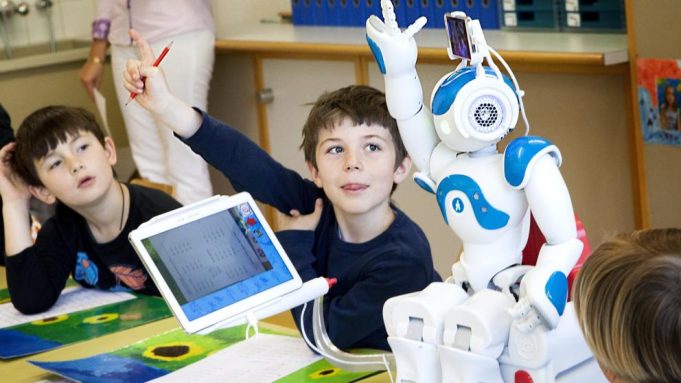
For these aims to be achieved it is essential to help the creators of educational programmes update their knowledge of AI, and to encourage them to integrate modules/courses reinforcing AI competencies into the curricula of schools and other educational centres, as well as to facilitate teacher training and to provide free online resources accessible to everyone.
The main aim is to contribute to greater integration of AI competencies into training programmes, in particular by guiding the development of teachers’ capabilities so that they give young people the means they need to stimulate their spirit of innovation and to build AI applications from their own perspective and way of understanding the world in which they will use it every day.
UNESCO, during the International Conference on Artificial Intelligence in Education held in Beijing from 16 to 18 May 2019, presented a document that provides guidance and recommendations on how best to respond to the opportunities and challenges linked to AI in order to accelerate progress in Education, in which international organisations, academic institutions, civil society and private-sector companies collaborated.
This document, called the Beijing Consensus on AI in Education, reaffirms the humanistic approach to deploying AI technologies in education in order to enhance human intelligence, protect fundamental rights and promote sustainable development through effective collaboration between humans and machines in life, learning and work.

The Consensus presents strategic recommendations on AI in Education in five areas: AI in the service of education management and delivery; AI in the service of empowering teachers and teaching; AI in the service of self-learning and the assessment of learning outcomes; developing the values and skills needed for life and work in the AI era; and finally, AI as a way of providing lifelong learning opportunities for all.
The Consensus also sets out recommendations on five cross-cutting issues: promoting the equitable and inclusive use of AI in Education; AI that respects gender equity and is favourable to gender equality; ensuring the ethical use of AI, so that it is transparent in its use of data and algorithms in education; and finally the development of monitoring, evaluation of results and improvement of the field of research.
The ultimate aim is to help the main actors of education systems be ready and able to harness the potential of AI with a view to guaranteeing inclusive, equitable and quality education, as well as lifelong learning opportunities for all. It is quite a challenge for the teaching sector, which will see that, in integrating AI into Education, it must modify its processes and roles and reformulate them in order to truly improve the traditional way of teaching and learning.
Originally published in Spanish on IANética (2020). English version prepared for TecnoHumanismo.
Related articles

Internet of Everything
Gartner named the Internet of Everything a top 2015 trend. How does IoE differ from the Internet of Things (IoT)? Let's explore its future.
Read article →5 min
What Is Technohumanism
Technohumanism unites Thought and Technology, applying the ideas of the Human Disciplines to the emerging technologies of the Fourth Industrial Revolution.
Read article →2 min

Nine Tools of Education 4.0
Education 4.0 rests on technological tools that make it work in practice. To apply it well, we need to know them in depth and use them to gain…
Read article →3 min