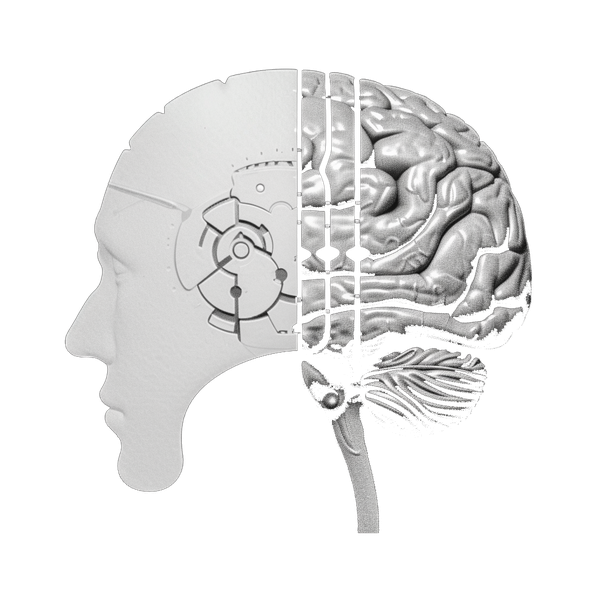

Europe has a unique opportunity to be the voice of the people. It can lead a historic Second Renaissance, in which the Human Being is placed at the centre and it is Technology that serves them.
2020 marks the beginning of a new era in which Artificial Intelligence and the Internet of Connected and Intelligent Things will transform Everything. Experience has taught us that the virtues of these new technologies are not guaranteed, so we must reflect more than ever, in order to chart the right path in every possible scenario.
How this should be done is a concern for all of us, so the time has come to move to Action, in an Innovative way that puts the Human Being at the centre of everything. This is what we call the Second Renaissance, an age marked by a transcendental movement, TecnoHumanismo, whose guiding maxim is to keep Technology always at the Service of the Human Being.
To this end there are two basic pillars of action: the Development of an Ethics for the proper use of Artificial Intelligence and the Internet of Everything (IANética), and the Education/Training of a new kind of TechnoCitizen who understands how the world will be transformed and what path they can follow to become an active part of this New Revolution, the Fourth Industrial Revolution.

The First Renaissance
The First Renaissance was the name given in the 19th century to a broad cultural movement that took place in Western Europe during the 15th and 16th centuries. It was a period of transition between the Middle Ages and the beginnings of the Modern Age. Its main exponents are found in the field of the arts, although there was also a renewal in the sciences, both natural and human. The city of Florence, in Italy, was the birthplace and cradle of this movement, which later spread across Europe.
The Renaissance was the fruit of the spread of the ideas of humanism, which brought about a new conception of man and of the world. The term “renaissance” was used to reclaim certain elements of classical Greek and Roman culture, and was originally applied to a return to the values of Greco-Roman culture and to the free contemplation of nature after centuries dominated by a more rigid and dogmatic mindset established in medieval Europe. This new stage put forward a new way of seeing the world and the human being, with new approaches in the fields of the arts, politics, philosophy and the sciences, replacing medieval theocentrism with anthropocentrism.
Mannerism, regarded by some critics as the Second Renaissance, was not born as a reaction against the High Renaissance but as a logical extension of some of its tendencies and achievements. The term usually leads to confusion, because there is a tendency to see it as an avant-garde movement, that is, one with a conscious direction that reacts against the moment immediately before it. For this reason it should not be understood as a homogeneous movement; one must attend to the particularities and nuances that each author gives it. We do not consider it a true Second Renaissance, and we have preferred to adopt this term to define the present era we are living through, thanks to the heyday of Digital Culture and Technology.
The end of the Contemporary Age
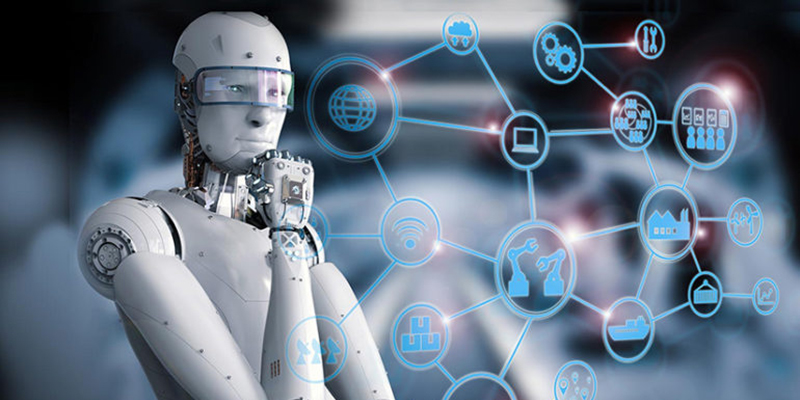
The emergence of Artificial Intelligence, Genomics and the Internet of Everything has generated so many social and economic changes that today there is a push to rename our era.
History has been divided into: prehistory, from the appearance of man to the emergence of writing; the ancient age, from the invention of writing (5000 BC) to 476 AD, with the fall of the Roman Empire; the Middle Ages, from 476 to 1453, the year Constantinople fell to the Turks; the modern age, which runs from 1453 to 1789, the year the French Revolution broke out; and finally the contemporary age, from 1789 to the present, although the United Kingdom does not recognise this period because for the British we are still in the modern age.
Over the last decade there have been changes so radical that they would justify a new age, though without knowing what its most fitting name should be; yet they are nothing compared with those that will take place in the next decade, beginning in 2020. We are entering a new period marked by the Fourth Industrial Revolution, the Fourth Digital Transformation, the emergence of Cybernetics, Genomics and the new, hyperconnected Internet of Everything, which allows ubiquitous universal knowledge that is accessible in real time.
These revolutions have generated new economic forms that are no longer centred on the production of food (the Neolithic revolution) or objects (the Industrial Revolution), but on intangible goods and knowledge. The period is engendering a new type of society that is beginning to be called the Post-Industrial Society or Knowledge Society. It is a new era marked by two main technologies, Artificial Intelligence and the Internet of Everything, which, despite carrying unprecedented existential risks for the Human Being, quite rightly mark the end of the Contemporary Age.
TecnoHumanismo
The Fourth Industrial Revolution is the Genesis of TecnoHumanismo, and it means not only a Revolution of industry but also of the Human Being as we knew them.
We are already immersed in the Second Cognitive Revolution, characterised above all by opening up hidden horizons, such as the discovery of unknown mental states and the achievement, dreamed of for so many centuries, of reaching immortality. That is why some world-renowned transhumanists such as Ray Kurzweil go so far as to claim that the first immortal superhumans are walking among us today. Meanwhile, Artificial Intelligence is plunging us headlong into the Second Machine Age, which will bring about the most important transformation of social, labour, economic and political organisation ever known.
This new technohumanist movement must be carefully formulated in an attempt to place the Human Being at the epicentre, and to make Technology serve human values and not the other way around. We are entering the era of the Second Renaissance, for which a new type of profile must be created, the Technohumanist, who recovers Mética (“Metics”), alongside Logic and Mysticism, and focuses the strengths of Technology through Mental Positivism and TechnoOptimism.
Originally published in Spanish on IANética (2020). English version prepared for TecnoHumanismo.
Related articles
AECTA Congress. Interview with Pedro Mujica
Interview with Pedro Mujica on his opening talk at the AECTA congress on AI and Humanism: technohumanism and the Fifth Industrial Revolution.
Read article →5 min
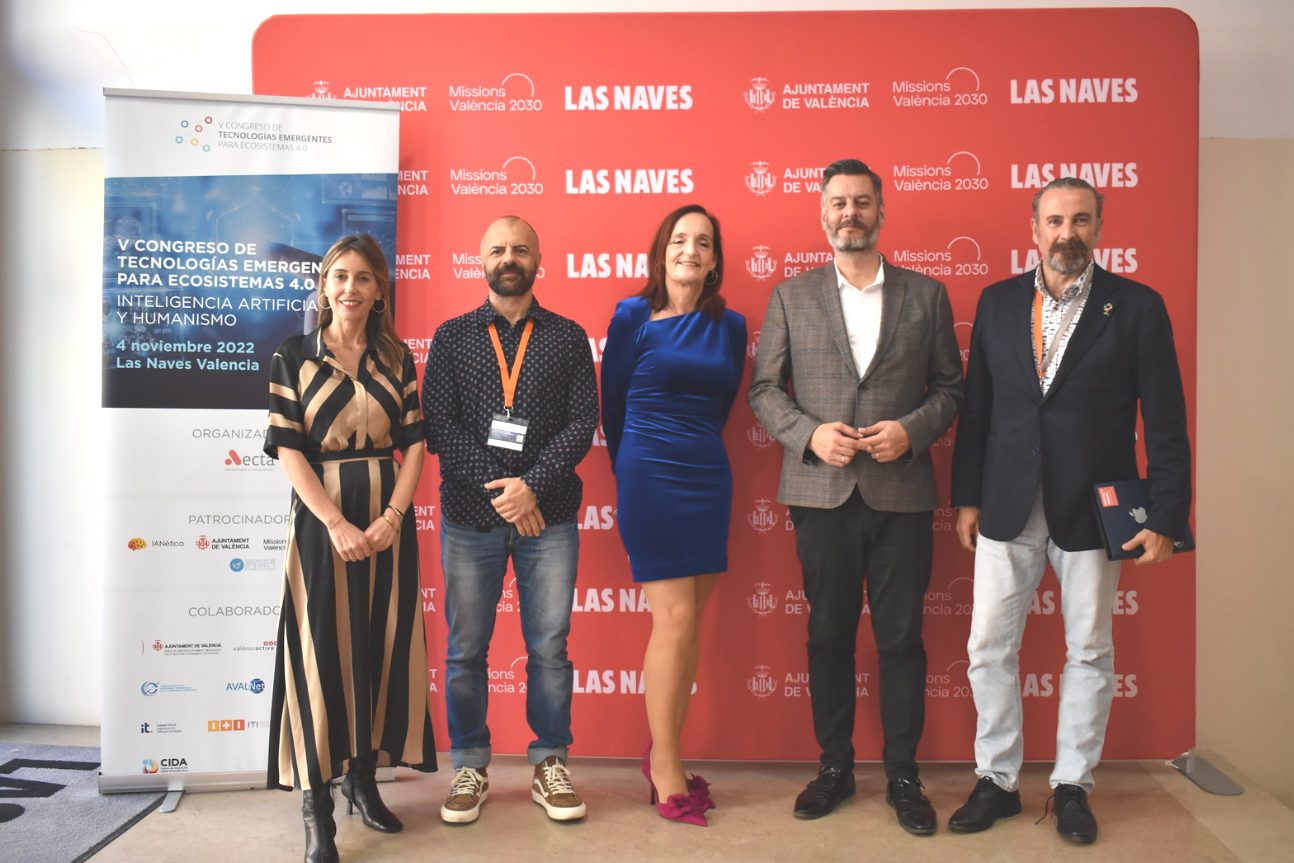
Technohumanism and Human Empowerment: Foundations of the Fifth Industrial Revolution
At the AECTA Emerging Technologies Congress in Las Naves, Pedro Mujica opened with a talk on technohumanism and the Fifth Industrial Revolution.
Read article →5 min
VIDEO | IANética Meeting: Will the Augmented Human Be a New Human Being?
Unlike Transhumanism, Technohumanism does not necessarily seek the evolution toward the Augmented Human, nor does it aim to halt a possible Cyborgization. It defines itself only as a…
Read article →2 min