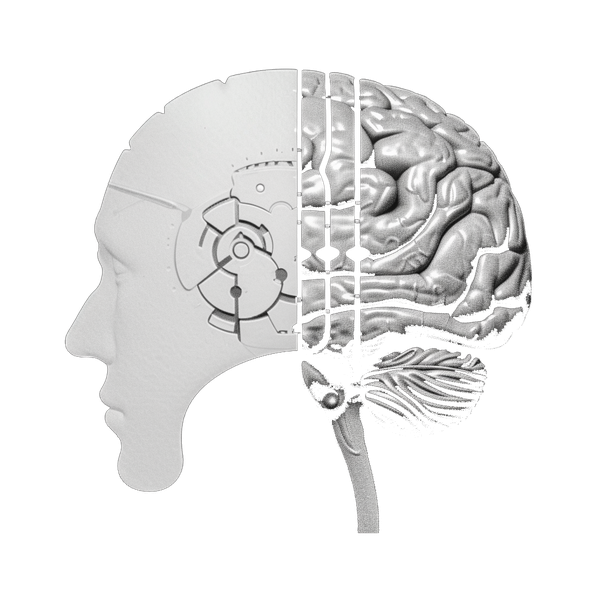

Nobody is obliged to share data. But if they decide to, and the data is sensitive, they should be able to exchange it reliably and with guarantees of its protection.
The European Union is a leader in digital citizen rights and is joining multiple efforts to provide businesses and citizens with the right tools to keep control over their data, as well as to build confidence that data is handled in line with European values and fundamental rights. The Right to Data Control, or the Right to Control One’s Own Data, is a fundamental right present in any proposal for a Charter of Digital Rights. Within the Technohumanist movement it is essential, and we understand that data belongs to us, a principle that must be reinforced with a strong legal basis to protect us.
The EU wants to regain control of its own data in the face of the growing power of the large digital platforms of the United States. On 25 November, the European Commission proposed a regulation on data governance aimed at creating a genuine European data market for the public sector and businesses, removing the barriers that currently hold back exchanges between Member States. The new rule aims to make it easier to use this data to develop applications in sectors such as mobility, health, energy and agriculture. The amount of data generated by public bodies, companies and citizens is constantly growing and is expected to increase fivefold between 2018 and 2025.
This regulation on digital identity and the safeguarding of data must be backed by civic education that lets individuals understand the risks of the digital environment and its intrinsic nature of spreading information and multiplying it exponentially according to the subjective interest that third parties may show in it.
In this way, people must be educated digitally and understand that this fluid conversation across the Internet can create a permanent footprint because of the interest of third parties who see the content as pure entertainment, whether it is a photograph, a comment or an account of some event. People lose control over information that can be stored by anyone and that can be published again on the Web at a later time and from other geographical locations. Thus, the best protection of privacy begins with one’s own awareness of not exposing oneself needlessly and with understanding the enormous importance of distinguishing the real space-time in which human relationships take place from that other, virtual space in which any data, image or information we offer up can end up in unwanted destinations.
We must recognize the right to erase past data and information that may become detrimental at another point in life, although one cannot demand that the references and reposts the information has had be removed entirely, since it could happen that this information resurfaces even after being deleted at the request of the original author. These are diffuse practices set in social contexts that are not clearly delimited, a circumstance that would justify refraining from interfering with individual freedom of choice and action in the sphere of the Internet. It is more coherent to try to have people learn the characteristics of the digital medium and understand how hard it is to move through it and safely safeguard privacy and intimacy. That is, it is very hard to act on the protection of privacy after the fact, once the individual has unwittingly published matters about their life that may prove compromising at a later stage.

We need a special defense of our rights in the face of the challenge posed by new technologies, in which data and algorithms have come to condition our lives, since they are essential for establishing containment measures against pandemics and other undesirable events in a new-normal scenario.
An appropriate and transparent use of personal data can bring general benefits to society and can be reflected in a better supply of goods and services, and may even become a tool to slow the spread of a global virus. However, misuse of information carries a risk that leads to greater exposure and vulnerability of citizens, and may result in a violation of their fundamental rights. That is why one of the fundamental rights of this new digital age we live in must be the Right to Data Control, because despite all the pros and cons, ultimately, our data belongs to us.
An example of bad practice in data management was the Facebook scandal that came to light in 2018. Cambridge Analytica, a consultancy for consumer research, advertising and other services related to data distribution for corporate and political clients, was hired by Donald Trump’s campaign team. One of the electoral strategies consisted of the development of applications that collected a range of personal data through Facebook surveys, managing to transfer, illegally and without its users’ permission, millions of personal and political data points to that consultancy.
It is estimated that around fifty million data records were stolen. With the information extracted, the British consultancy managed to design an Artificial Intelligence system that predicted voting intention, which made it easier for Trump’s campaign to influence the American electorate. According to various experts in electoral analysis, this political strategy was decisive in the United States presidential elections in giving victory to the now recently departed ex-president.
Algorithms are today the essence of power. Which translates into the key to political, social and economic control. Mastery of these mathematical techniques will divide the world between those able to impose their criteria and those dominated by the former. New technologies based on the mastery of algorithms will open a gap between people and between countries, changing the concepts we know today as wealth and poverty.
What exactly are algorithms? How are they built? What is their power based on, the power to compel people to decide even what is not in their interest? Artificial Intelligence is developed from algorithms, which use mathematical learning capabilities, and from the data needed to train these algorithms. Data is usually observable, publicly available or generated within some companies, and algorithms operate on that data to learn from it. In sum, these are mathematical mechanisms that seek to guarantee the solution of a specific problem in a given time, determining the content and sequence of a series of actions capable of transforming initial data into the desired result.
This opens a new era of unknown impacts, although the least gifted, those with less knowledge or those who perform repetitive tasks, will without any doubt be replaced by machines in which algorithms will be the fundamental instrument of their operation. A power that will combine enormous technological capabilities with powerful mechanisms able to mathematically analyze millions of data points per second, in a world that, as Harari relates in Homo Deus, will give rise to a “useless class”: a new human group that will be beyond the comprehension of the new machines. A kind of “superfluous” people, who will be pushed aside and will only be the object of manipulation by the new technologically dominant classes, the techno-elites. A new society in which a few will end up dominating the majority.
This possible dystopia must be deeply reflected upon and we must avoid it with total and absolute conviction. For that reason, and now more than ever, we must understand that this machine feeds on our data, and without it, it will not work, so establishing a Fundamental Right over the Control of Personal Data will be one of the basic pillars of the Second Renaissance, where there is truly full inclusion of all individuals and technology is a tool at the service of citizens.
Originally published in Spanish on IANética (2020). English version prepared for TecnoHumanismo.
Related articles
The Right to Digital Security and Ethical Hacking
Digital security is deeply tied to people: how online behaviour and information security are regulated has major implications for privacy and human rights.
Read article →7 min

The Right to the Truth
The right to the truth means full knowledge of the facts, who took part and in what circumstances, especially gross human rights violations.
Read article →6 min
Ethics in the Metaverse
The Metaverse is still taking shape. Now is the time to discuss, alongside its technology, its necessary regulation and the ethical issues to consider.
Read article →11 min