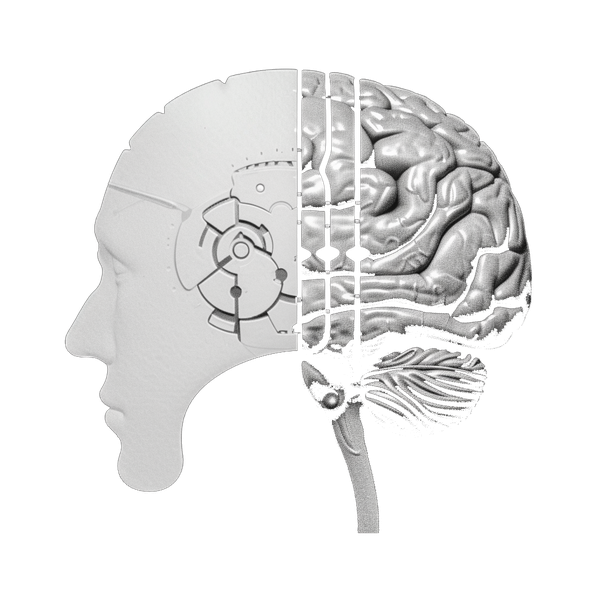

Technology and democracy will join forces and feed back into each other to change state governments, empower citizens and end the current system in which the political class, which represents only 1% of the population, makes decisions unilaterally. This techno-governance, together with the development of the Fourth Industrial Revolution, will lead us to a new Welfare State 4.0 and to the resulting revision of the current Social Contract.
Technodemocracy means that, through the use of new technologies, all members of society, including elected representatives, should have the opportunity to communicate with one another to make political decisions. In this model of government, all members of society can propose options and prioritise among everyone’s proposals to choose the one that suits best. In this way, when everyone can vote in real time and decide on the option that most interests each person, the decision is aligned with the interest of the majority and social wellbeing is maximised.
Communication must take place on a public social platform, where each member of the collective is a sovereign part and can control their participation without the bias of a third party. The work of representatives would be subordinate to fulfilling the mandate of the majority and being accountable in a transparent way.
Jason M. Hanania, author of “Architecture of a Technodemocracy: How Technology and Democracy Can Revolutionize Governments, Empower the 100%, and End the 1% System”, guides us on how technology and democracy can feed back into each other to revolutionise governments. The world is ready for radical changes in government, where each of us has the same voice and we are all responsible. In Architecture of a Technodemocracy, Hanania offers a detailed plan for how to take advantage of current government processes, communication systems and Blockchain security to take the next step in the evolution of human government.

Technodemocracy
A Technodemocracy can be created without spending taxpayers’ money, without passing new laws, and without relying on career politicians for leadership. Like Bitcoin, Technodemocracy uses readily available technologies to decentralise power from the 1% to the 100%. Despite having been drafted more than 200 years ago, the Constitution allows for a technodemocratic republic. Hanania asserts that the first elected technodemocratic candidate will implement the technology needed to decentralise the four powers of government from the 1% to the 100%.
Hanania proposes developing, through the maximum use of technology, four universal rights:
1) The right to communicate;
2) The right to propose in order to have options;
3) The right to decide on the choices;
4) The right to accountability.
The world is immersed in a moment of great change, where the Technosociety informs itself, communicates and organises every day in real time and in a fully decentralised way; institutional evolution must point toward a model of this nature.
It will constitute the birth of a true Horizontal Society, consolidated by 4.0 digital technology, which will grow together with the strengthening of these rights. The true transformation, the participatory transformation, will be feasible thanks to the tools that Emerging Digital Technologies will provide, turning the concept of Technodemocracy into a reality.
The Great Transformation
The last 50 years of our society have been marked by a technological evolution, which has brought about a significant change in people’s lives and in the functioning of social and economic structures. In this technological race, the biggest global disruptor has been the internet. With its birth also came Cyberspace, that virtual universe in which machines are connected through networks and where all the information that human beings produce is created and shared.
Today the amount of data obtained from this hyperconnectivity is hard to quantify, but it is estimated that by 2025 some 463 exabytes of data will be created every day around the world. We call it the daily Global Big Data, and it is equivalent to roughly 35,000 towers of books, each 150 million km high, the distance from the Earth to the Sun. We must consider that in this Massive Big Data, every user is a generator of information who is unaware of the millions of digital footprints they leave on the internet, which are stored and frequently sold to third parties. This is clearly an enormous risk to the privacy and security of individuals.
This digital revolution is giving rise to a new Society. Alongside the generation of Massive Data and the need to protect personal privacy and data ownership, new forms of work never seen before appear, demanding new labour rights and relations; the same happens with competition in the markets for goods and services, which require changes in regulations and in consumer protection rights.
The new reality does not fit the legislation we know, so it is constantly failing at regulating the new methods of production, labour relations and the ways the business fabric interacts. Some disruptive innovations, such as Artificial Intelligence and the Internet of Everything, which includes people as data generators, are developing at the limits of what societies consider ethical.
This Fourth Industrial Revolution and its powerful Digital Technologies have brought about a kind of refounding of what the great Viennese thinker Karl Polanyi called, in the mid-1940s, “the great transformation”. In this new era of the Internet of Everything and Artificial Intelligence together with massive Big Data, societies have changed their ways of interacting, exchanging information, generating value, and many other aspects to such a degree that a new “social contract” is required to ensure the prevalence of democracy and its institutions, and above all to put these technologies at the service of the Human Being.

A New Social Contract
The concept of the social contract originally belongs to the thinker Jean-Jacques Rousseau, who in the mid-18th century wrote a book of the same title, considered a forerunner of the French Revolution and of the Declaration of the Rights of Man, and which dealt with the freedom and equality of people under States instituted by means of a social contract. That contract was a kind of agreement among the members of a given group that defined both their rights and their duties, which were the clauses of such a contract. Those clauses are not immutable or natural, but change depending on the circumstances and transformations of each historical moment and on the balance of forces among the members of the groups.
Therefore, in order to achieve the design and implementation of a new Social Contract suited to the New Digital Society and following the guidelines of a TecnoHumanismo at the service of the Human Being, we must face different debates and new challenges that allow the emerging social class of the digital age to take part. This new era tests the capacity of democratic states to defend the values of equality, freedom, anonymity and privacy that are threatened today. It opens up the need to develop a new agreement between States and their citizens; a renewed social contract that rethinks the traditional relations between the two, and that redefines the boundaries of public and private actors.
The social contract and the Welfare State that emerged after the Second Industrial Revolution were crucial in securing the prosperity of most societies in advanced economies and in bringing about the Great Levelling. The Fourth Industrial Revolution, the genesis of TecnoHumanismo, calls for a Welfare State 4.0 in line with the new social and economic needs. There are reasons to be optimistic about the future, but only if our societies are able to manage these changes properly and provide a new Social Contract in keeping with this Digital Revolution. To achieve this and reach a consensus as quickly as possible, one of the main solutions is to establish a Technodemocracy platform that lets us see this New Horizontal Digital Society emerge.
It is very likely that some societies will do better and get there before others. Those able to design Welfare States 4.0 that work more efficiently, such as Japan, Korea or Iceland, will make better use of the power of the new digital technologies to generate wealth, while achieving lower levels of inequality and greater intergenerational equity.
The proposal of TecnoHumanismo is to achieve this through education and solidarity, which will reduce digital illiteracy, in order to create usable knowledge about Artificial Intelligence, algorithms, data analysis and mining, Blockchain or the Internet of Everything, among others. The urgency of designing a new Social Contract adapted to the 4.0 Revolution, using the tools that Technodemocracy puts at the citizen’s service, is crucial above all so that the legal and ethical questions are addressed as soon as possible, which will guarantee the survival of democracy, equality, security and people’s privacy.
Originally published in Spanish on IANética (2021). English version prepared for TecnoHumanismo.
Related articles
Technology and Individualism: The Right to Remain Human
Rising depression, loneliness and child and youth suicide are multifactorial, but technology is one of their main drivers in recent years.
Read article →4 min

Ethics in the Metaverse
The Metaverse is still taking shape. Now is the time to discuss, alongside its technology, its necessary regulation and the ethical issues to consider.
Read article →11 min
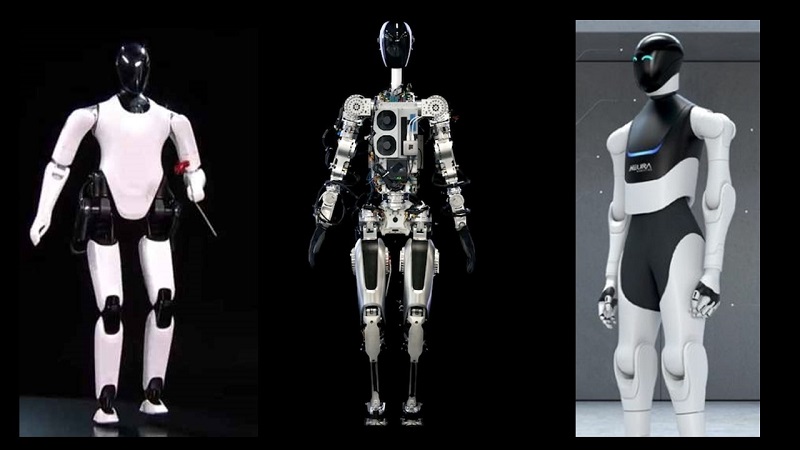
Ethics of Advanced Robotics and Humanoids
As advanced robotics and humanoids take hold, an essential debate on ethics emerges: how to integrate AI into robots while protecting human dignity.
Read article →6 min