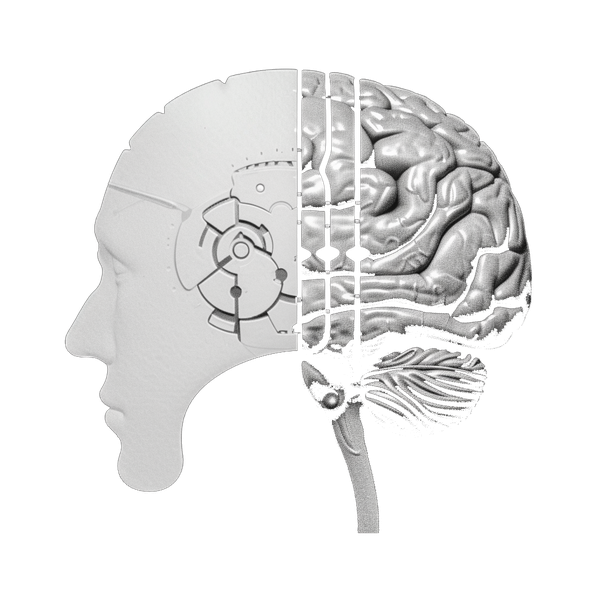

Round table held in Madrid, at the second edition of Canal Connect, an annual international meeting devoted to the links between the performing arts, science and technology, which this time was hosted in the Teatros del Canal building in Madrid and the spaces of its Centro Coreográfico (Choreographic Center).
Companies such as Le Ballet National de Marseille, the Danish Dance Theater or Spain’s Stocos, and artists such as Hiroaki Umeda or Huang Yi & Kuka presented their artistic proposals on the stages to make us reflect on the relationships between movement, stage, electronics, virtual reality, metaverse and robotics.
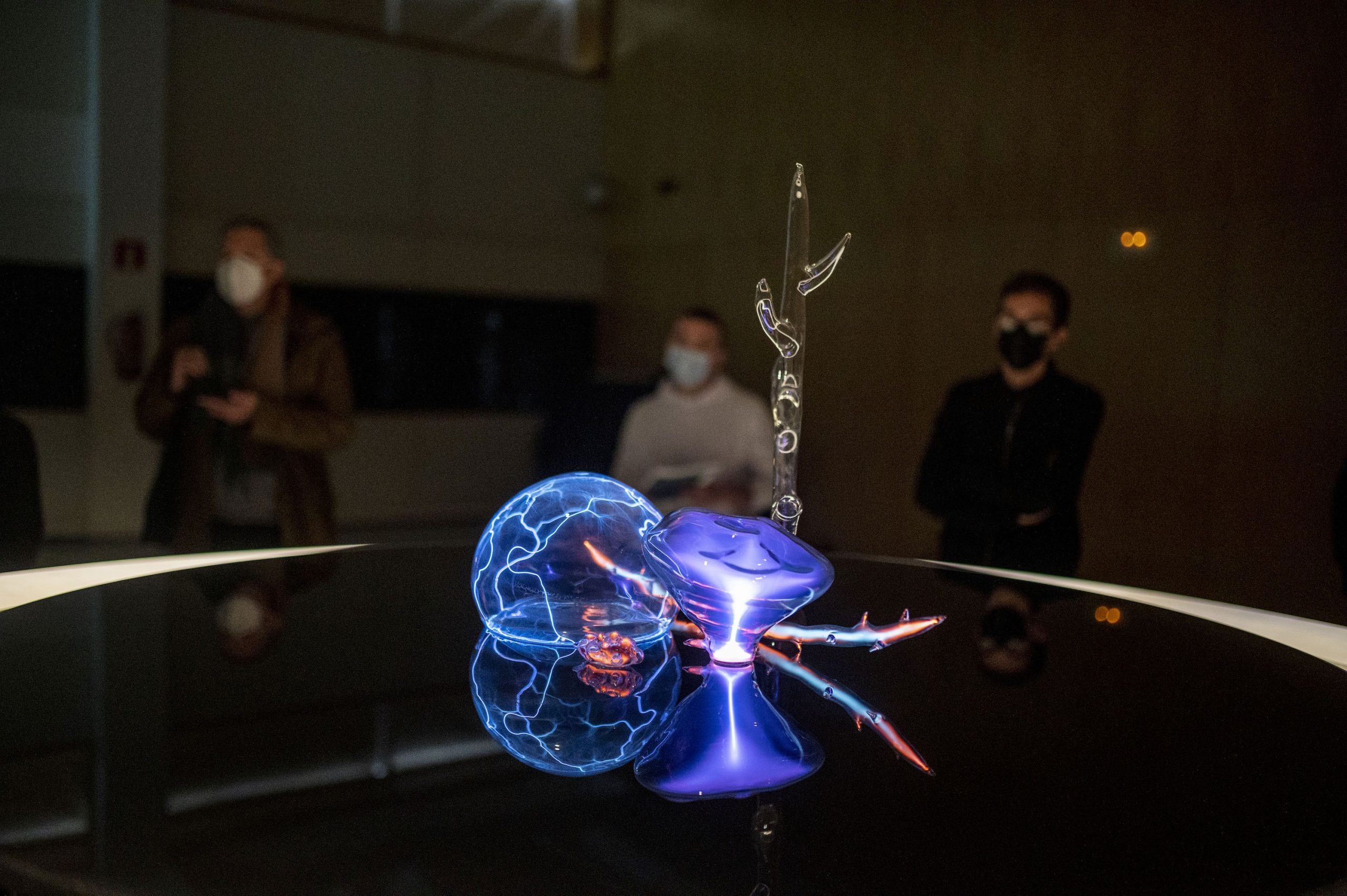
At the same time, the exhibition Máquina Mística (Mystic Machine) examined the current status of technology and its links with spirituality and new human oracular rituals, with a variety of pieces ranging from installations to audiovisual projections, by internationally renowned artists such as Filipe Vilas-Boas, Véronique Béland, Thierry Fournier, Cécile Babiole or Evi Keller.
This second edition was a thoroughly sensory and intellectual experience that recovered, updated and made tangible that old law of the scientist, inventor and science fiction writer Arthur C. Clarke, who stated: “Any sufficiently advanced technology is indistinguishable from magic.”
We took part in the round table on «SPIRITUALITY AND IDENTITY: AN ARTISTIC-TECHNOLOGICAL APPROACH», held on Saturday 26 March in the press room of the Teatros del Canal in Madrid. Together with Montxo Algora, Director of ART FUTURA, with whom I am currently collaborating, Albert Barqué-Duran, Neuro Digital Artist, and Jorge Esteban Blein of Cuarta Pared VR.
The starting context of the round table was how the Fourth Industrial Revolution involves putting forward concepts such as Technohumanism, which refers to the use of technology in the service of people; the evolution of the person into the posthuman, or Transhumanism, the cultural and intellectual movement that advocates improving the human condition through technologies, among others.
And of course, the Metaverse, which allows us to enter virtual worlds where we can have new identities to live a life alternative to the real one. Indeed, the pairing of Science and Technology has given us the possibility of extending ourselves beyond our person, whether physically, intellectually and/or spiritually, which has also had an impact on the way we express ourselves, convey messages, emotions and thoughts, and also on the way we create and reconstruct ourselves.
And from here, many questions arise, among them, what are the limits between the real and the virtual? Which identity will be the real one, the one we show in the physical world or in the virtual world? How do these identities coexist? What do these new worlds mean for artists when it comes to creating? How does this affect the way art pieces are accessed, as well as the more or less active role of the person in the narrative of artistic proposals?
To answer some of these questions we had Pedro Mujica, as Humanist Technologist and promoter of the IANética Project. As we have developed in our technohumanist manifesto, the Metaverse can be one of humanity’s great revolutions as long as it is placed at the service of people and not only of investors. Ensuring that the Fourth Industrial Revolution is, first and foremost, Human-Centered means that policymakers, technology leaders and citizens must collaborate and co-create systems based on shared human values. The Metaverse, as a new evolutionary form of the Internet, must be developed following these principles, without which any artificiality we create will make no sense.
Here we leave you the full video of everything discussed at the round table, where the most notable thing was the underlying approach given to the concept of spirituality as the essential attribute of all human beings that allows us to grow and evolve.
Spirituality as the essence of the person, made up of the set of principles, values and attitude toward life. A concept, in turn, related to others, either directly or transversally, such as transcendence, identity, evolution or consciousness.
The debate was very organic and fluid, and many topics we had planned beforehand were left behind, such as Transhumanism in art, what the Metaverse means for artists and technologists, how our different identities interrelate, what our true identity is, how we relate to technology, and in particular, how the artist and the creator relate to the tools, the new languages and the spaces that Science and Technology provide.
And so a great conversation remains open, and, inviting reflection, we put to our readers the question of where the limits might lie in the use of new media, digital tools and virtual worlds. With a view to understanding the strict linear relationship between causes and effects that could end up being a faithful reflection of the complex nuances of the real world, and setting as a goal development in an ethical, responsible and above all sustainable and inclusive way with respect to the whole broad spectrum of people who represent the human species.
Originally published in Spanish on IANética (2022). English version prepared for TecnoHumanismo.
Related articles
Animayo Festival. Ethical and Moral Questions About the Metaverse and Artificial Intelligence.
Round tables at the 17th ANIMAYO Festival in Gran Canaria on the ethical and moral questions raised by the metaverse and artificial intelligence.
Read article →5 min
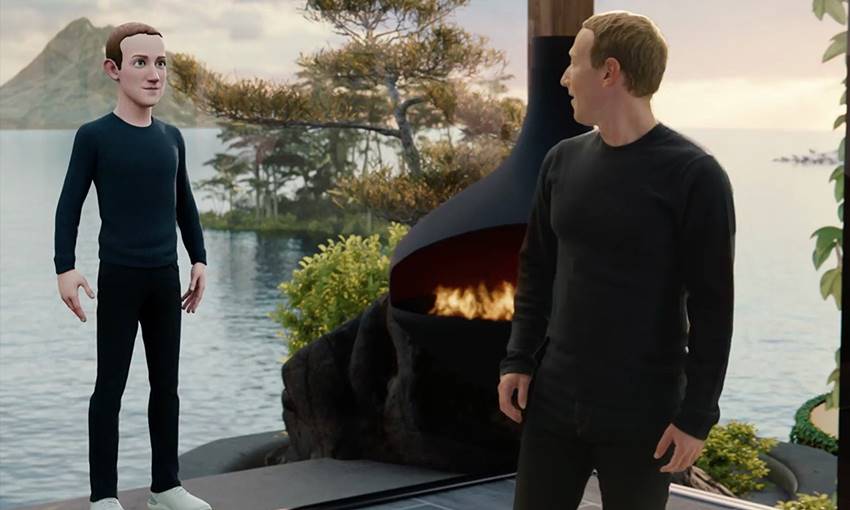
RTVE Informe Semanal: Our Technohumanist View on the Report «Rumbo al Metaverso» (Heading for the Metaverse)
A 15-minute report aired nationwide on La 1 and the 24 Horas channel on 4 June 2022. Pedro Mujica opens by defining the Metaverse.
Read article →3 min
Ethics in the Metaverse
The Metaverse is still taking shape. Now is the time to discuss, alongside its technology, its necessary regulation and the ethical issues to consider.
Read article →11 min