
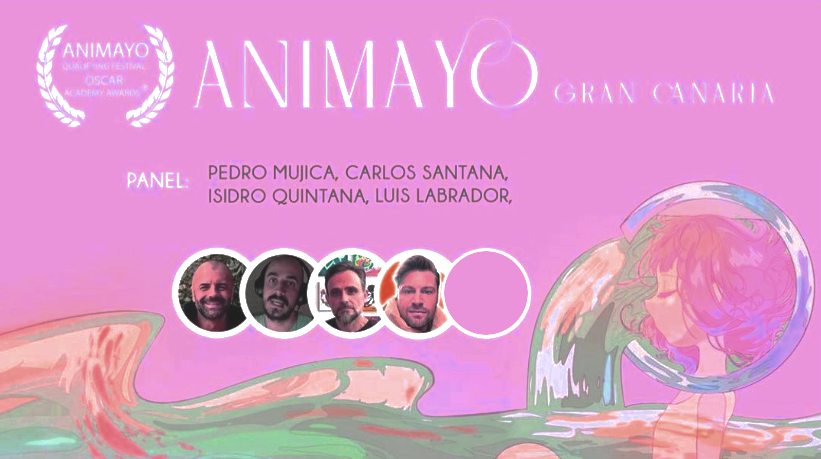
Round tables held in Gran Canaria, at the 17th edition of the ANIMAYO Summit, Conference and International Film Festival of Animation, Visual Effects and Video Games. An annual international gathering held in cities such as Los Angeles, Madrid, Barcelona, Chicago, Mumbai and Brussels.
In May 2022, the Academy of Motion Picture Arts and Sciences in Hollywood granted Animayo a second distinction. Animayo reaches a new milestone by qualifying in two categories for the Oscar®️ shortlist. This means that, having already been the first and only animation festival in Spain to qualify for the Oscars® in the international animated short film category, it is now also the only festival of its kind that qualifies the best animated work in the Spanish language, “animation with an Ñ”, so countries with Spanish as an official language can compete for the award.
Animayo was founded in 2006 in Spain, directed by the Spanish director and producer Damián Perea. The festival is now a benchmark in the field of animation, with 17 years of standing. It is an inspirational and motivational event, with 75% of its content devoted to training that boosts creative development and audiovisual production.
In both in-person and online formats, it develops activities in animation, visual effects, virtual reality, video games and new audiovisual technologies. From Gran Canaria (Spain), it extends its programme to other cities and countries in its “Animayo Itinerante” (Touring Animayo) version, held in Los Angeles, Madrid, Barcelona, Lanzarote, Portugal, the Czech Republic, Brussels, Chicago, Mumbai, Prague, Colombia, Belgrade and Korea.
We took part in two round tables where we discussed “ETHICAL AND MORAL QUESTIONS ABOUT THE METAVERSE AND ARTIFICIAL INTELLIGENCE”, held on Friday 6 and Saturday 7 May at the Centro Cultural Cicca in Las Palmas de Gran Canaria. Alongside Carlos Santana, an artificial intelligence communicator with his DOTcsv channel, which has more than 583,000 subscribers, Luis Labrador of Disney and Isidro Quintana of Triple-O games, among others.
The first table, held on Friday, focused on Ethics in the Metaverse, the new evolutionary phase of the Internet, which lets us step into virtual worlds where we can take on new identities and live an alternative life to the real one. The debate raised many different points, from the honesty of our personal or professional relationships to the psychological effects on those who do not want to see themselves as their avatars show them, or the creation of new models and standards of digital beauty with unforeseeable effects.
And from here, many questions arise: where are the limits between the real and the virtual? Which identity will be the real one, the one we show in the physical world or in the virtual world? How do these identities coexist? What do these new worlds mean for artists and 3D animators when it comes to creating?.
Pedro Mujica acted as moderator of this first table. A Humanist Technologist and driving force behind the IANética Project, he argued that although the Metaverse may be one of humanity’s great revolutions, it must be put at the service of people and not only at the service of corporate profit.
It is a new world where we expand reality and challenge it, and where data are a fundamental part of the ambitious goal of building the Metaverse. We must therefore hold the big technology companies accountable so that they value transparency and the ethical use of the data they collect. Helping to build guidelines on privacy, ethics and security for this emerging new reality.
The second discussion table dealt with Artificial Intelligence (AI), and we talked about how much it is facilitating remote collaborative work, remote working, entertainment, online learning, and so on. But in 2022, what truly matters around the application of this technology has to do with the ethics of the humans who design it.
This year we saw accelerated growth in practical applications of artificial intelligence, driven by greater availability of data, computing power and a market that is beginning to see the benefits of applying it. As these applications expand, ethical dilemmas arise: what biases do the data we train the models with contain? Is it being used to help people? Is the power this tool represents being abused? In 2022, when we talk about designing applications that include artificial intelligence, ethical questions cannot be left out. It is a fundamental issue.

In this debate Pedro Mujica recalled the six most important points to bear in mind in the development and use of artificial intelligence from an ethical and technohumanist approach: The first is prudence, the need to be aware that a large number of scientific and technical obstacles remain to be solved, in particular the problem of common sense. The second concerns reliability, that is, artificial intelligence systems must undergo tests that determine their reliability and safety. Another aspect is accountability, when a system makes decisions, the people affected by them must be able to receive, in terms they understand, an explanation of why it made them, and must be able to challenge them with reasoned arguments.
The criterion of responsibility is also pointed out: it must be clear whether the interaction is with a person or with an artificial intelligence system and, in the latter case, those responsible for it must be locatable and identifiable. Another issue is the limited autonomy of these systems. Clear rules are needed to limit the behaviour of autonomous artificial intelligence systems so that those in charge of developing them can incorporate them into their applications. And finally, the role played by the human being must be made clear. In almost any area, human capability still far exceeds artificial intelligence, especially in handling cases that have not appeared in the example datasets that artificial intelligence systems learn from
In this way, the debate concluded that the most important thing for the proper development and use of artificial intelligence is ethics, and above all the awareness shown by the responsible decision-makers who will set the course to follow in this crucial and historic decade.
Originally published in Spanish on IANética (2022). English version prepared for TecnoHumanismo.
Related articles
Spirituality and Identity: An Artistic-Technological Approach
Round table at the second Canal Connect in Madrid, an annual international meeting on the links between performing arts, science and technology.
Read article →4 min
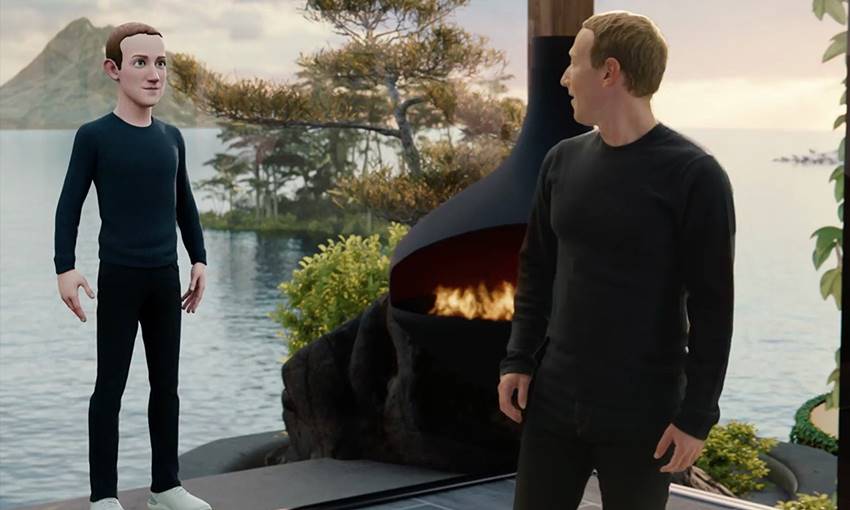
RTVE Informe Semanal: Our Technohumanist View on the Report «Rumbo al Metaverso» (Heading for the Metaverse)
A 15-minute report aired nationwide on La 1 and the 24 Horas channel on 4 June 2022. Pedro Mujica opens by defining the Metaverse.
Read article →3 min
Ethics in the Metaverse
The Metaverse is still taking shape. Now is the time to discuss, alongside its technology, its necessary regulation and the ethical issues to consider.
Read article →11 min