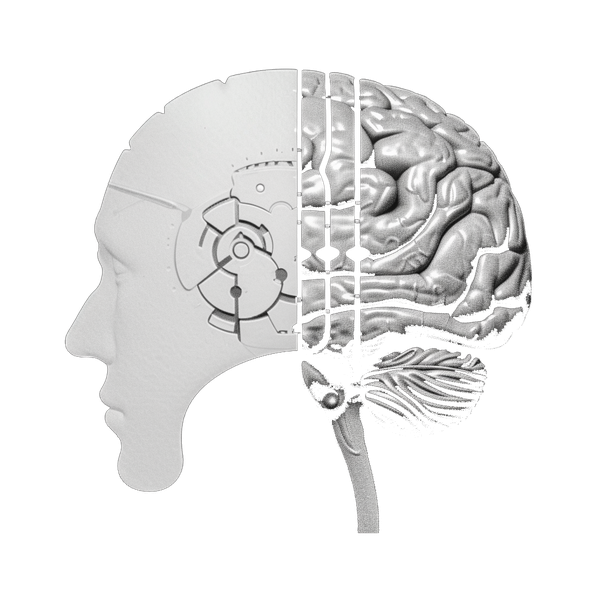

Should we create consciousness in a machine?
In the last decade, enormous progress has been made in understanding how the human brain works, and in getting computers to perform tasks once considered deeply human.
The shadow of automation hangs over jobs of every kind: this week Microsoft announced that it will not renew the contracts of 50 news production staff working at MSN. Those positions will be replaced by Artificial Intelligence.
Machines threaten to replace not only laborers, factory workers, call center employees, waiters or police officers: journalism, content production and the creation of digital pieces could also be taken over by algorithms responsible for performing tasks that were once human.
“If that were so, or to the extent that it is so, it would imply a profound redesign of the social model, which could either be implemented slowly from a democratic ideology or burst out abruptly in the form of a revolution. Automation does not have to mean favoring a few governments or multinationals to make them more powerful; it could also mean freeing people from the slavery of having to work 8 hours or more a day so that they work one or two without losing quality of life. In other words, automation implies wealth, and that is good news; the question, as always, is how that wealth is distributed.” says the Barcelona-based thinker and creative Daniel Solana, author of the book Desorden (Disorder), which deals with the recovery of Mética in the Second Renaissance.
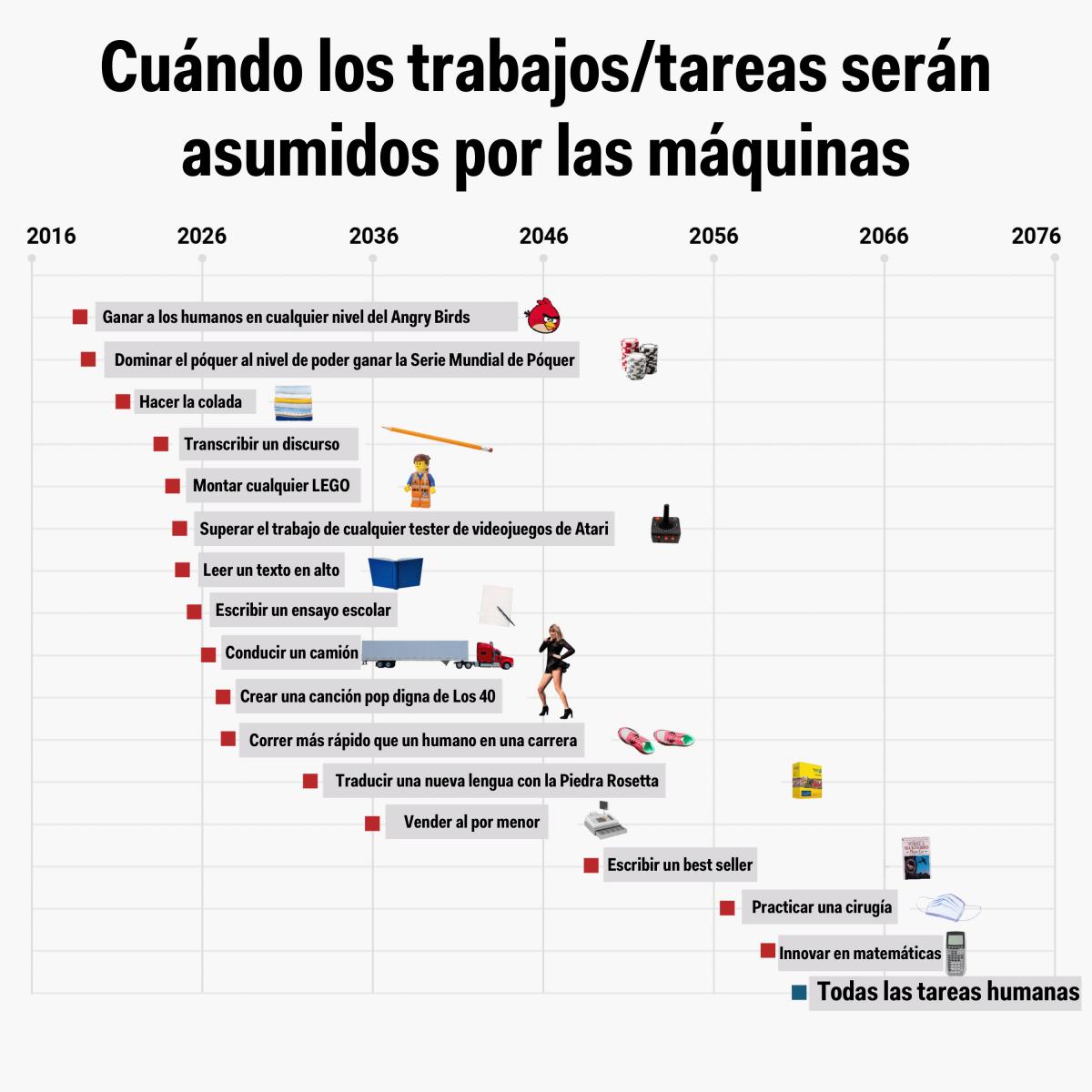
It is increasingly evident that computers and robots will surpass our abilities in practically any task without being conscious. So, why try to create conscious machines?
One position holds that we must transfer consciousness to them, because without it they lack an ethical sense, and they could come to see us as dangerous and unpredictable beings. And this is not good for us at all; it cannot end well.
In the words of David Chalmers, a controversial TechnoPhilosopher who advocates AntiHumanism: “My thinking revolves a lot around the machine and consciousness. Can a machine be conscious? is a recurring question usually asked about any AI-based system. AlphaZero can play a great game of Go or Chess. Is AlphaZero conscious? Most of us will say no. Is an autonomous vehicle conscious? No. Does it experience anything when it turns, subjectively, left or right? Obviously not.”
But we say so without understanding how extremely difficult it is to measure consciousness. So it is hard to know for certain, both from a scientific and a philosophical point of view. Could a machine, in principle, be conscious? According to Chalmers, his inclination leads him to think that the answer is a resounding yes.
Basically, because the human being is also a machine, but a biological one. Indeed, this definition of the Human Being may be accurate: we are machines. Our brains are the most complex machines we have found in the known universe. But this complexity does not allow us to deny the evidence.
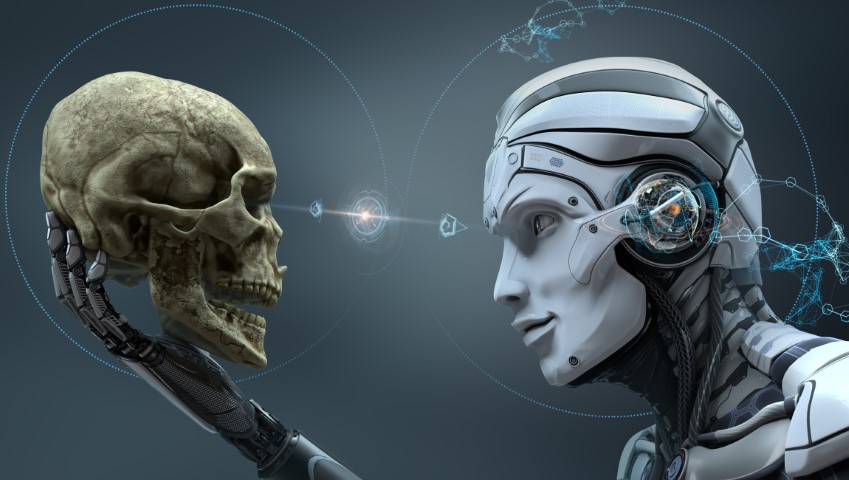
And being machines, we are conscious. Therefore, it is a kind of proof that demonstrates irrefutably that a machine can be conscious. If we can define ourselves as biological, conscious machines, it is irrefutable that a machine can then be conscious.
But what about a synthetic being? Is it not comparable to a biological being? Is the artificial part of our universe? Can the artificial become aware of what it means to be a space-time expression of our vast universe? Like a drop from the great ocean, which separates momentarily and for a brief period of time becomes conscious of individuality, only to merge back into it, into absolute totality.
What is so special about Biology compared to Artificiality? What makes a biological neuron special compared to an artificial neuron that works the same way? The functions of a neuron can be replicated in a sophisticated electronic circuit, which will end up forming the body of a machine or of an anthropomorphic synthetic being. What difference will there be between them at the machine level? Hard to know.
Today no AI researcher or scientist would be able to answer these questions, which step outside the purely technological realm and enter fully into the field of philosophy or even spirituality. What makes us conscious? Why, being machines, do we see ourselves as so different, superior and separate from the machines we are creating in our own image and likeness?
In The Age of Spiritual Machines, Kurzweil states that spiritual experiences have patterns of neural reactions in each area of the brain, and that they could be reproduced by software. This claim has brought much controversy and debate. The Discovery Institute Press published in 2002 the book Are We Spiritual Machines?, reflecting on the possibility that we attribute spirituality to machines.
Is the emergence of deep consciousness the antechamber of spirituality? Be that as it may, we must bear in mind that as long as we do not know which mechanisms make us essentially human in consciousness and transcendence, perhaps we should not bequeath these deeply human qualities to our creations, intelligent machines.
Originally published in Spanish on IANética (2020). English version prepared for TecnoHumanismo.
Related articles
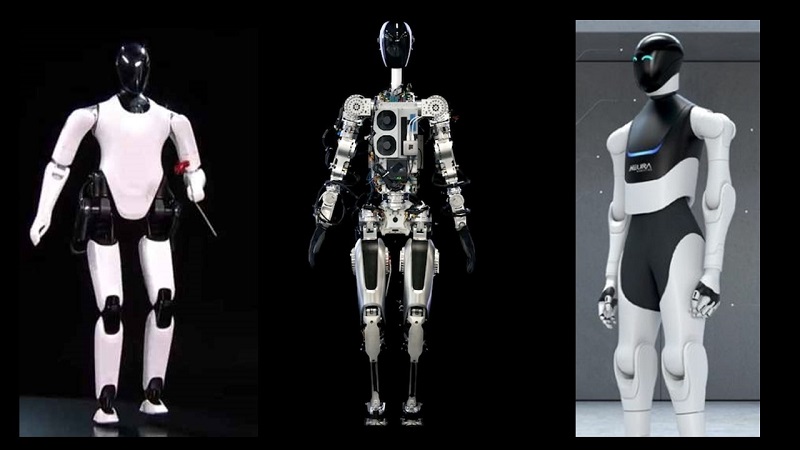
Ethics of Advanced Robotics and Humanoids
As advanced robotics and humanoids take hold, an essential debate on ethics emerges: how to integrate AI into robots while protecting human dignity.
Read article →6 min
Technology and Individualism: The Right to Remain Human
Rising depression, loneliness and child and youth suicide are multifactorial, but technology is one of their main drivers in recent years.
Read article →4 min
The 7 European Rules for Developing Trustworthy Artificial Intelligence
Europe will focus on technology that benefits people, a fair and competitive economy, and an open, democratic and sustainable society.
Read article →7 min