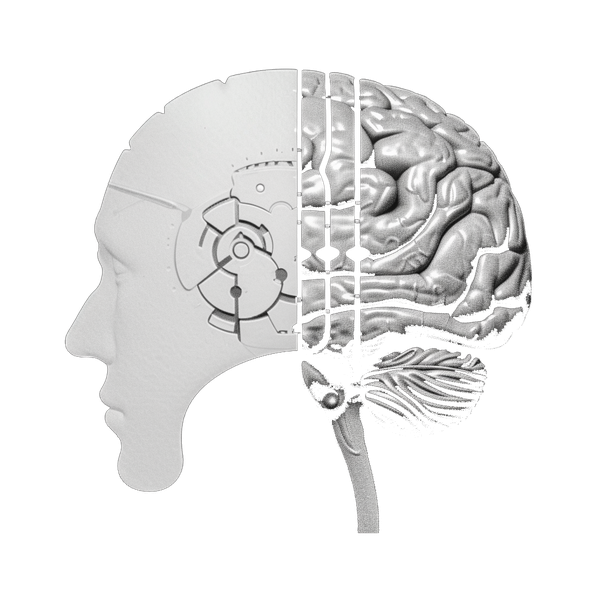

The keys to the new Education 4.0, associated with the Fourth Industrial Revolution, are people. Technology is only the tool that, if well conceived, adds value to this new Talent 4.0. It will therefore be crucial to align the management of individuals’ skills development with society’s digital transformation strategy from a global, multidisciplinary perspective, placing emphasis on both stimulus and development.
Talent 4.0 is defined by people with a special aptitude in terms of ability and attitude, and some outstanding competence in one or more areas of Industry 4.0, such as digital attitude, creativity, innovation or STEM skills. It is also defined as the result of a development process that transforms natural, intellectual, creative and social aptitudes into specific competencies as a consequence of a series of enablers provided by training programs and educational opportunities, in combination with a set of individual and collective attitudes, such as motivation, entrepreneurship, constant curiosity, self-learning, resilience, collaboration, coopetition, networking, teamwork or leadership, among others. It is therefore a multipotential competence that is not reduced exclusively to high ability or intellectual aptitude in STEM areas but also includes digital attitude, passion for change, self-learning and resilience.
STEM vocations in the areas of Science, Technology, Engineering and Mathematics are an essential source for generating this type of talent for Industry 4.0. However, very few students choose these areas even though Industry 4.0 will create more than 7 million jobs in this decade. There is therefore an enormous challenge for Industry 4.0: balancing STEM vocations and Talent 4.0. It is a challenge that must be overcome with enablers in the form of educational and training programs that foster STEM vocations, and, from a more humanist approach, even STEAM, which includes the Arts.
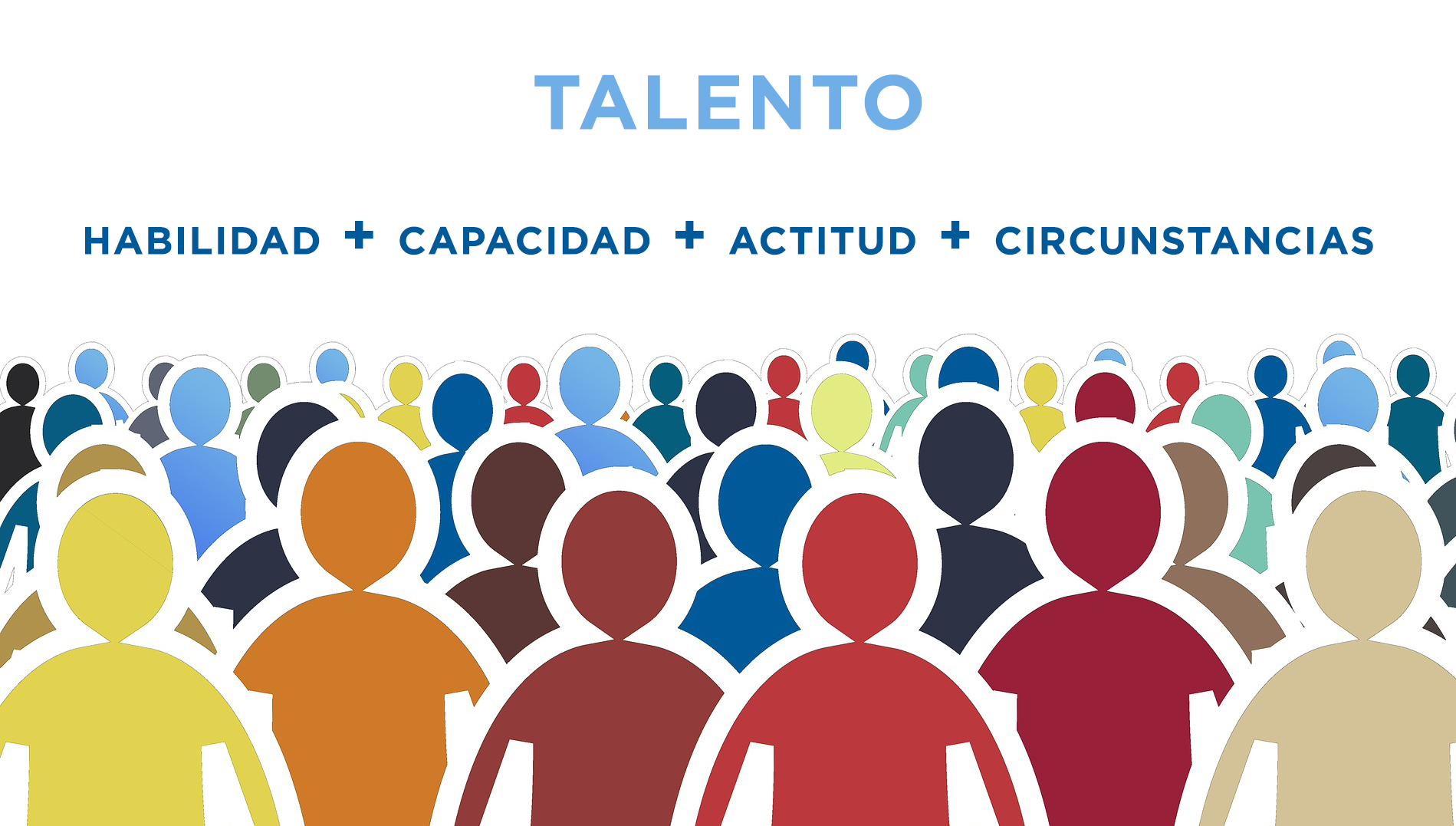
Challenges of Talent 4.0
The second great challenge of Talent 4.0 is to overcome the gender gap, since many more women should join the Industry 4.0 workforce. Programs are therefore needed that specifically foster STEM and STEAM vocations among the female population.
The third challenge is the alliance between Industry 4.0 and Vocational Training under the Dual Vocational Training (FP Dual) model. The competencies of Talent 4.0 must be aligned with dual training programs, with a greater presence and leading role for company tutors in designing the curriculum and the competencies for Industry 4.0.
The fourth challenge of Talent 4.0 is the alliance between Industry 4.0 and the University. Many entrepreneurs and managers of digital transformation perceive, from their own experience, the University as a space foreign to this process. Nevertheless, it is key to design specialized master’s degrees and training programs in which both companies and the most advanced university R&D&I centers take part, for the practical, real-world learning of the competencies or skills of Talent 4.0.
The fifth challenge of Talent 4.0 management is to align attraction and selection processes with competency-based management and with the digital transformation of the human resources department itself. CSR (Corporate Social Responsibility) programs and policies to stimulate Talent 4.0 in collaboration with the education system are not enough.
The sixth challenge is that companies must keep cultivating and developing their talent with active programs and policies that also transform the culture of organizations and make Industry 4.0 companies exceptional places to work and, therefore, ones that retain their workers. In this challenge, programs to develop exceptional Industry 4.0 leaders, who foster collaboration and train resilience, for example with techniques as innovative as mindfulness, are essential.

Learning 4.0
Industry 4.0 is characterized by three essential aspects: more flexibility in production tailored to each customer, more speed by reducing the time to market, and greater efficiency based on the data analytics of digitalization and the Internet of Everything.
In parallel, Education 4.0 is also based on three fundamental characteristics: Flexible Learning according to the needs and interests of each student, Self-paced Learning at each student’s own speed regardless of age and cycle, and Digital learning with constant feedback from the data analytics derived from the progress of learning itself (Learning Analytics). We can therefore say that the key to Education 4.0 is Learning 4.0: flexible, self-paced and based on data analytics.
As in Industry 4.0, the digital transformation of education is an unstoppable process, of great impact and irreversible. The question for educational institutions is not whether or not they join the unstoppable revolution of digital transformation, since we know that those that do not will disappear, but the speed at which they carry out this process. In this sense, Technology is a key catalyst of the Digital Transformation of Education.
Key trends accelerating the adoption of new technologies in education:
- Next 2 years: Growing focus on measuring learning, Increase in blended or hybrid learning.
- 3 to 5 years: Redesign of learning spaces, Shift to deeper learning approaches.
- 5 or more years: Advance of a culture of change and innovation, Rethinking how institutions work.
Significant challenges for digital transformation:
- Solvable: Blending formal and informal learning, Improving digital literacy.
- Difficult: Competency-based education models, Personalization of learning.
- Very difficult: Balancing our connected and unconnected lives, Keeping education relevant.
Important developments in educational technology for Education 4.0:
- Within 1 year or less: Bring Your Own Device (BYOD), Learning analytics and adaptive learning.
- Within 2 to 3 years: Mixed, augmented and virtual reality, Makerspaces.
- Within 4 to 5 years: Affective computing, Robotics and Cobotics.

Pillars of Education 4.0 for the generation of talent
Besides technology, Education 4.0 rests on three other fundamental pillars not directly related to technology but whose development will be decisive thanks to digital transformation: the personalization of learning, Schools as centers for talent development, and finally the learning of key 21st-century competencies.
- The personalization of learning: just as Industry 4.0 must address and satisfy the completely individual demands of each customer, and do so from the data analytics of sensors, processes, data and people of the Internet of Everything, Education 4.0 must be based on the personalization of learning, also thanks to the data analytics derived from the progress of learning itself (Learning Analytics). School 4.0 will offer learning personalization services both in and out of the classroom, attending to cognitive and non-cognitive dimensions. The individual student thus becomes the great focus of Education 4.0. An example of this trend toward personalization is platforms such as School Improvement Network’s GAGE or Renzulli Learning.
- Schools as centers for talent development: Education 4.0 is based on policies and programs for managing the talent of all students according to their learning potential. It is essential to identify the learning potential of all students through Talent Search processes, enrich the curriculum for all students and develop specific programs for the talent development of the most able that allow them to learn at their own pace and speed.
- The learning of 21st-century competencies: the teaching of Education 4.0 focuses on the acquisition of 21st-century competencies, especially all those that robots cannot perform: creativity, assertive communication, teamwork, creative thinking, innovation, networking in work and collaboration networks, emotional intelligence, or resilience.
Originally published in Spanish on IANética (2020). English version prepared for TecnoHumanismo.
Related articles

The Right to Education in the New Digital Era
The right to education, a fundamental right enshrined in the Charter of Human Rights and the Spanish Constitution, also extends to the digital sphere.
Read article →6 min

Nine Tools of Education 4.0
Education 4.0 rests on technological tools that make it work in practice. To apply it well, we need to know them in depth and use them to gain…
Read article →3 min

Education in 2030 and the Key Aspects of Learning 4.0
Education 4.0 must develop alongside the Fourth Industrial Revolution and shares its 4.0 Technologies. These are the key aspects of Learning 4.0 for 2030.
Read article →6 min