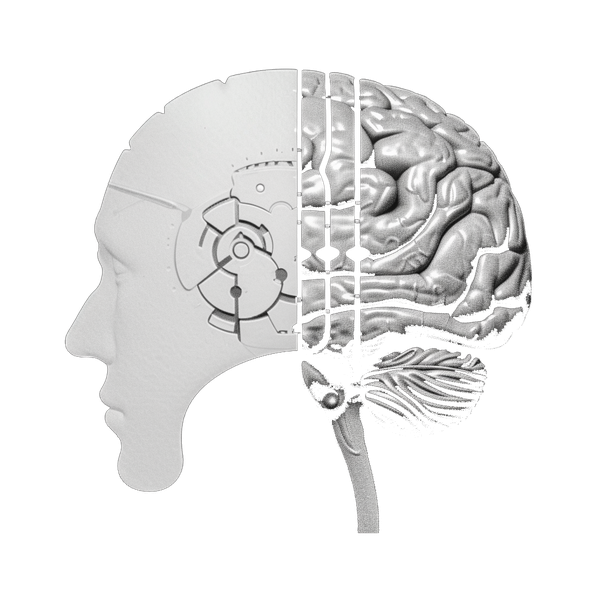

Faced with the unstoppable advance of digital technology and the new Metaverse, specifically the arrival of 3.0 tools based on Blockchain and Artificial Intelligence, we ask ourselves whether our concepts of digital property and intellectual property still make sense or have been altered by the new forms of information, communication and expression, with the birth of the new evolutionary phase of the Internet that will make it possible to own user-generated content in a unique and traceable way.
The concept of intellectual property is defined in Royal Legislative Decree 1/1996 of 12 April (Real Decreto Legislativo 1/1996), which approves the Consolidated Text of the Intellectual Property Law, regularizing, clarifying and harmonizing the legal provisions in force on the subject, and is understood as the set of rights that belong to authors and other rights holders (artists, producers, broadcasting organizations…) with regard to the works and performances that result from their creation.
When the context is Web 2.0, there is no doubt: the creator is not only the company or owner of the digital platform or application, but also the users who contribute their content, who must be granted protection. A large part of the content we read online is generated by users themselves. Today, more than ever, the Internet in its 2.0 variant is the most powerful tool of collective intelligence. Therefore, the creation and exploitation of intellectual property is now in the hands of each and every user, whether as authors or as users of protected works, facilitating communication, the exchange of information, interoperability and collaboration.
Web 2.0 has been, so far, the Era of the Prosumer, the Producer/Consumer user, and the right to Digital Property must be fundamental in fostering a fair Global Digital Ecosystem that protects content creators. But this is where the difficulty and the necessity of digital intellectual property lie: distinguishing between lawful and unlawful acts becomes extremely complicated in Web 2.0, and the effort to find a system that satisfies the interests of creators and users has not borne fruit, but it is the path to ensuring a balance between private and collective interests.
But this scenario is changing with the new Web 3.0 and the appearance of NFTs, which make it possible for the new Prosumers to now also be Owners with digital and intellectual property rights, backed by a totally disruptive technology, BLOCKCHAIN, which brings benefits unmatched by any previous technology:
- Uniqueness and Authenticity of assets
- Cryptographic security of data
- Total transparency in transactions
- Instant traceability of tokens
- Greater efficiency and speed in the system
- Automation and Interoperability
- Decentralization and Self-regulation
The digital property rights in BLOCKCHAIN are provided by open, permissionless protocols and guaranteed by the collective computation of the community’s consensus. This allows the assets of environments with NFT-based virtual economies to be exchanged between their holders in a way that is unthinkable on most traditional Web 2.0 platforms. The digital property conferred by BLOCKCHAIN technology will allow the Internet and its new evolutionary phase, the Metaverse, to develop their true potential as genuine community ownership and governance.
NFTs also enable interoperability and functionality across platforms, which means that the digital assets themselves become the center of the user experience: basically, the content will become the platform. Just as you can own a single set of chess pieces that can be played on many different boards, over time you will be able to own NFT accessories that can be used on different platforms and applications or that give access to different virtual worlds. The metaverse is already very close to becoming a tangible reality.
The more the content of virtual environments and experiences is tokenized, whether in its 2.0 format or in the new 3.0 format, in order to empower Prosumers and give them Digital Property Rights, thus turning them into Owners, the greater the optimism we can have about the future of our Digital Ecosystem, which is already the main support of our Civilization.
In other words, our world is moving toward a new global Internet or Metaverse that is far more decentralized and equitable. This is underpinned by BLOCKCHAIN technology as a transparent and immutable base infrastructure for accountability and is driven by an incentive model that rewards the communities that contribute, build and maintain its value.
The new digital economy will rebalance the flows of money and power, reduce the impact of intermediaries in virtual worlds and finally free us from restrictions that have been with us for decades. History is full of examples of societies that move from autocratic systems to far more democratic ones, but this could be the first time it happens on such a large scale.

The new Web 3.0 and its associated digital technology will allow greater freedom in the creation and exploitation of intellectual property content and, logically, greater freedom always demands greater responsibility. Only through awareness and the development of laws that protect the fundamental right to digital and intellectual property will it be possible for the new era of the Internet, where the user is the true owner, to work for the benefit of all: authors, rights holders and consumers. It would not be necessary to create ad hoc regulation for the new digital environment in general, or for the Metaverse in particular. This is in addition to finally having a mechanism for identifying digital assets as powerful as BLOCKCHAIN, which makes it possible to associate each asset with a single, authentic owner.
To reinforce the creation of these new laws, Web 3.0 offers another mechanism that could change everything: Decentralized Autonomous Organizations, known as DAOs, organized by a group around a mission coordinated through a set of rules established on BLOCKCHAIN . The revolution proposed by DAOs, which are already emerging as great alternatives for generating collaborative projects, represents one more step in the consolidation of the Metaverse and Web 3.0, characterized by Decentralization and by the fact that it will consolidate as a transparent ecosystem in which each person can be compensated for their time and their data, thereby taking power away from the big tech giants that have ended up taking over users’ personal information and, above all, their life time, with practices as unethical as those promoted by Stanford’s captology institute.
In this new scenario, it is advisable for the Web 3.0 user, as an author and owner who makes their digital assets available to the community on the new Internet, to set terms of use, in which case these assets, whether for personal or public use, will be subject to them. And for the new Web 3.0 and the Metaverse to establish self-regulation systems and guidelines that guarantee the protection of people’s rights regarding digital and intellectual property without hindering the development of new technologies such as BLOCKCHAIN, NFTs, Smart Contracts or DAOs.
Originally published in Spanish on IANética (2022). English version prepared for TecnoHumanismo.
Related articles
The Right to Digital Identity
Digital identity is a user's data, actions, opinions, photos and digital footprint, plus what others publish about them. Security and privacy are key.
Read article →7 min
The Right to Uniqueness for the Best Possible Future
Uniqueness, the quality of being unique and unrepeatable, is at stake from human cloning to digital identity impersonation. Why we must protect it.
Read article →6 min
Ethics in the Metaverse
The Metaverse is still taking shape. Now is the time to discuss, alongside its technology, its necessary regulation and the ethical issues to consider.
Read article →11 min