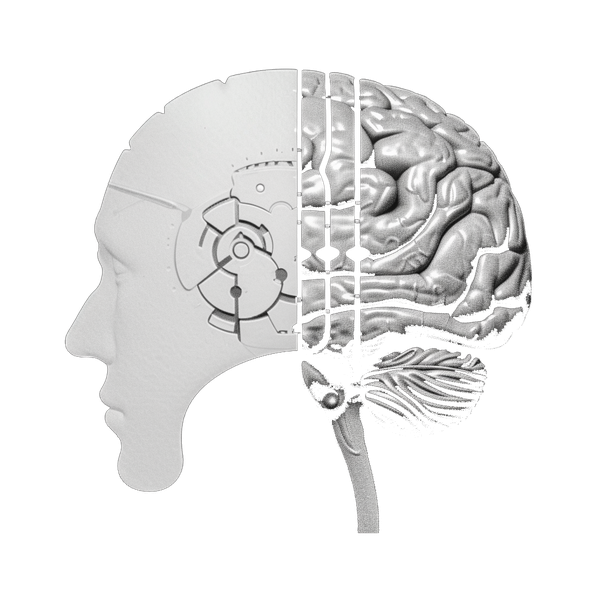

Technique and technology are distinctive elements of the human species. If we pause to analyze the origin of our species, we find that they not only set us apart from other living beings but, in a certain sense, define us.
And this is so because we take the emergence of the genus Homo to coincide with the appearance of the first lithic tools. However, does this mean that the definition of human life is exclusively tied to technology? Is technology, in and of itself, an element that adds value, freedom and dignity to human life?
As Donald Cardwell points out in his History of Technology, the beginning of the history of Homo sapiens lies in the appearance of the first tools made by him. This is not an arbitrary criterion, since the ability of an individual to mentally project what he wishes to build and then reproduce it in matter marks an important difference from other living beings. There are chimpanzees capable of planning and predicting the outcome of their actions when using certain objects. However, no other living being has been able to move from modifying the materials of the environment to creating new materials or endowing them with characteristics they did not originally possess.
On the other hand, technical innovations have not been the only fruit of our minds. As Harari explains in Sapiens, thanks to the cognitive revolution, and as we abandoned the customs of hunter-gatherers, our ability to create and share a collective imaginary appeared. What this made possible was the creation of myths and stories that strengthened group cohesion by developing a common identity. Other animals are also able to cooperate with one another. However, this capacity is restricted to a small number of close individuals, whereas humans create agreements and networks of cooperation of global reach.
In short, we could distinguish two areas of human progress. On the one hand, a technical progress, defined by the refinement of the instruments we build and of the techniques for building them. On the other, a social progress, which has allowed us to understand one another and to achieve goals unthinkable for us as individuals. But the interesting thing is that it would be impossible to decide which of the two has weighed more in our evolution as a species. The refinement of stone-carving techniques came with significant brain development, but the need to maintain social ties with an ever-growing number of individuals was also decisive in our evolution as a species.
In spite of all this, it does not mean that, throughout history, the advance of both areas has been harmonious. It is true that the pursuit of knowledge and scientific progress has been possible thanks both to our technical skills and to the ability to collaborate on a global scale among different groups of researchers. However, the appearance of figures such as Mengele on the Nazi side made us realize that experimentation has limits. Likewise, achieving peace is an aim we could consider desirable at all times, but obtaining it by dropping atomic bombs on civilian populations, as in the case of Hiroshima and Nagasaki, raises many doubts about the means employed… although Doctor Manhattan from Watchmen might have something to say about it.
For this very reason, the task of finding situations in which this dissent is present today should have our full attention. For, as we have just seen, the fact that both currents look in different directions does not produce a broader perspective, but a terrifying distortion of reality. And one of these cases of historical strabismus could be found in the differences between the 1948 Universal Declaration of Human Rights and the Transhumanist Declaration, whose origin goes back to Natasha Vita-More’s 1982 Transhumanist Manifesto and which, after some variations, has been adopted by the Humanity+ association.
These contradictions may not be very obvious, but that is because they do not appear to lie in their ends but in their means. Indeed, on a first reading of both documents we can deduce that the aim with which they were drawn up was to preserve human life, as well as its dignity and freedom. For example, the preamble of the Universal Declaration of Human Rights says that the highest aspiration of humanity must be “the advent of a world in which human beings shall enjoy freedom of speech and belief and freedom from fear and want”. Likewise, in the fifth article of the Transhumanist Declaration we find the following precept: «Reduction of existential risks, and development of means for the preservation of life and health, the alleviation of grave suffering, and the improvement of foresight and wisdom should be pursued as urgent priorities, and heavily funded».
However, we can find ourselves at the crossroads of two paths that begin to diverge if we look at article three of the Universal Declaration of Human Rights and article one of the Transhumanist Declaration. While in the former we read the much-cited expression «everyone has the right to life», in the latter we find that its proposal consists of “expanding human potential by overcoming aging, cognitive shortcomings, involuntary suffering, and our confinement to planet Earth”.
And it is true that both measures might well seem to continue to defend the need to eradicate human suffering and improve our living conditions. However, the possibility raised by the Transhumanist Declaration of getting ahead of the limitations of age breaks any possible balance. This is because the aim of avoiding the effects of age presupposes an attempt to eliminate one of the most common causes of the end of life, to which every person has a right according to the human rights declaration.
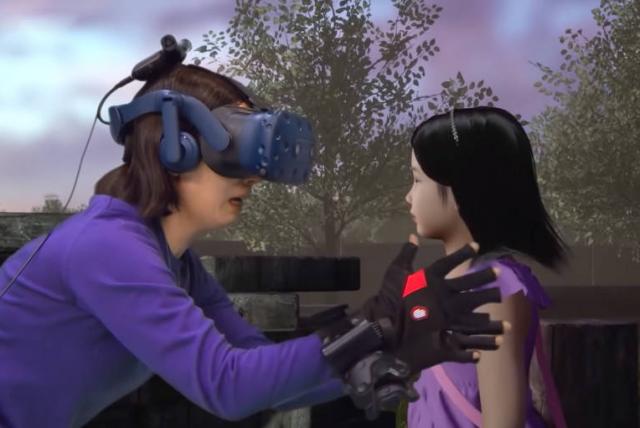
Does this mean, then, that to make the transhumanist proposal and that of the United Nations General Assembly compatible we should grant all individuals the right to a life free of aging? After all, would we not be denying the right to life to someone we let die from the effects of age when there is a way to prevent it? Or would the possible access to an eternal life open a gap between two kinds of humans with entirely different sets of rights? Would access to technology alone mark this difference? Or would we perhaps find desirable a dystopia in the style of the manga Alita, Battle Angel, where a privileged few live in the floating city while the rest search for bionic replacements for their bodies among the rubble falling from that unreachable city?
Be that as it may, the truth is that, even though both proposals seem to wish for a future in which human life is better than it was at the time they were written, they seem to follow completely different paths. While the Universal Declaration of Human Rights travels a route based on moral norms and empathy, the Transhumanist Declaration seems to have taken the road of our technical capabilities and the longing for constant perfection. It is as if both were tied to opposite ends of the same rope and tried to advance with their backs to each other, so that each step of their own is a step back for their antagonist.
Nevertheless, I do not think we should regard one path as more legitimate than the other. Nor do I think it is right to demonize technological progress or to brand as reactionaries those who abide by moral norms. It would not even be legitimate to cut the rope that binds them so that both could run uncontrolled toward their goal. After all, what is immoral about seeking to prolong life indefinitely? And what precept against technological progress can conceal the right to life of any person? That is why our goal should not be to pit the two visions against each other or to put one before the other, but to make sure they never lose sight of the crossroads they are at, that they realize they are tied together by the feet and that they find a way to walk in parallel. Or, better still, that they discover how to widen the path enough for both to travel it together.
Originally published in Spanish on IANética (2020). English version prepared for TecnoHumanismo.
Related articles
VIDEO | IANética Meeting: Will the Augmented Human Be a New Human Being?
Unlike Transhumanism, Technohumanism does not necessarily seek the evolution toward the Augmented Human, nor does it aim to halt a possible Cyborgization. It defines itself only as a…
Read article →2 min
The Second Renaissance
Europe can be the voice of the people and lead a historic Second Renaissance, with the Human Being at the centre and Technology at their service.
Read article →5 min

The Right to Digital Inclusion
Digital inclusion is a human right arising from the technological environment the Internet created. Today, digital exclusion equals social exclusion.
Read article →5 min