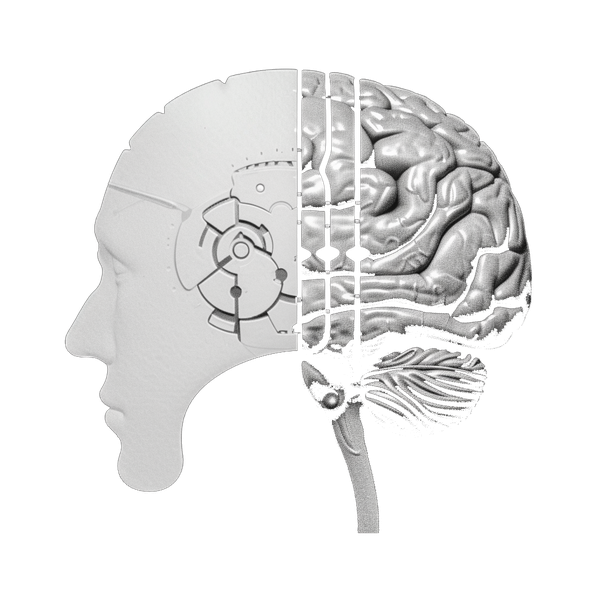

Education 4.0 must develop hand in hand with the Fourth Industrial Revolution and shares its 4.0 Technologies with it. Although 2030 has been set as the goal for making it tangible, it is gradually becoming a necessary option whose digital tools constantly evolve, teaching teachers and students how they must learn to find their way in the accelerated world we live in.
The emerging technologies of the Fourth Industrial Revolution, such as Extended Reality, Artificial Intelligence, Big Data, Blockchain, Robotics and Cobotics, or the Internet of Things (IoT), are already having an unprecedented impact on industry, the economy, communications, the way of doing business, marketing, systems and politics, among many other fields. In the context of Education 4.0 these technologies are starting to be applied in almost every area of Learning, so that both teachers and students, regardless of age, income level or location, must be prepared for the new dynamics that their integration brings.
This means that they must learn a series of skills and abilities that allow them to be competitive and to adapt to the constant changes that are occurring at an ever greater speed. Some of these competencies are the ability to solve complex problems, teamwork, communication, adaptability, emotional intelligence, critical thinking and above all computational thinking.
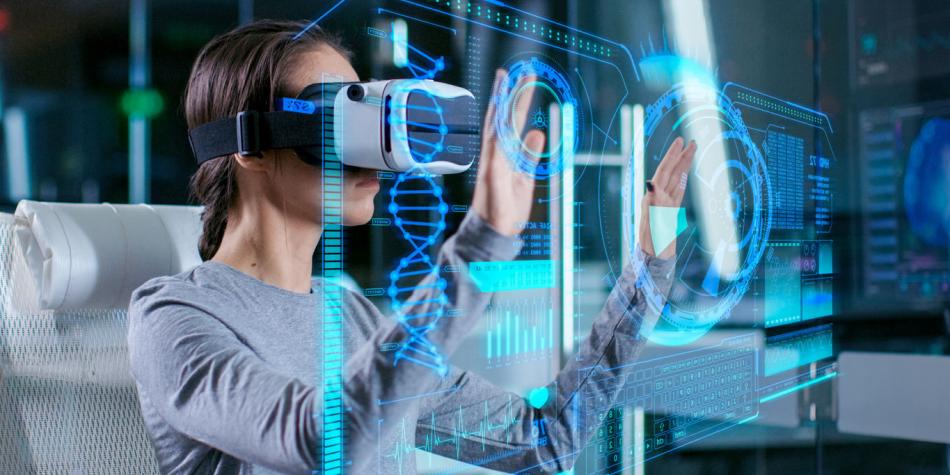
But for this learning of skills and abilities to be truly effective, it is essential first to understand the key aspects of this new Learning 4.0. These depend directly on the integration of the Emerging Technologies of the Fourth Industrial Revolution in the classroom, which is what will make it possible to reach the goals set for the new education in this decade of 2030.
Expansion of the Classroom: The classroom expands from the physical and in-person towards the artificial and virtualised. Its space grows considerably thanks to its new digital nature. The 4.0 classroom has no limits.
Decentralisation: Presence in learning becomes digital and remote. Consequently, it is decentralised. It is no longer necessary to attend teaching centres exclusively in person.
Massiveness and Growing Demand: With the expansion of the classroom towards the digital, the number of students also grows. 4.0 technologies make it possible to meet the enormous and growing educational demand and make it optimal despite its massive nature. For the first time, the number of students is not a detriment to education.
Production of Knowledge: The production of knowledge becomes two-way. Students go from being consumers of information to prosumers, or producer-consumers. While they learn, they put forward new content through real-time interactions and variations of the digital content.
Diversity of Time and Place: Digitalisation allows the learning process to be carried out without depending on a specific time or place. One learns anywhere and at any time. This is the new Whenever/Wherever paradigm.
Digitalisation of Content: Learning and Education 4.0 are strongly tied to the digital transformation of schools and educational plans. The digitalisation of content is accelerating markedly thanks to the growing demand for digital education.
Fast and efficient training: Thanks to this digitalisation of content and Whenever/Wherever access, each student sets their own pace, which is usually faster and more efficient than the traditional one, resulting in much more flexible learning.
Personalised Learning: This is one of the most relevant aspects of the new Learning 4.0: the ultra-personalisation of content and of the educational process itself for each student.
Adapted to the Needs of each student: Within this personalisation and everything it implies, the most relevant element, and a genuine disruption, is the ability to adapt in real time to the needs of each student as they progress through their learning process.
Greater autonomy and Involvement: In this digital, decentralised, ultra-personalised and fully flexible context, accessible at any time and place, students gain a sense of greater autonomy and freedom. Being masters of their own time and effort, their involvement and responsibility increase.
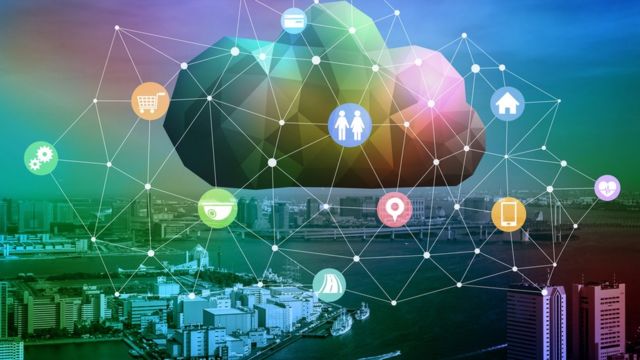
Protagonism in the process: This new Learning 4.0 is entirely based on putting the student at the centre of the experience. It is a process of empowerment aimed at making each student feel like the true protagonist of the educational cycle they themselves decided to undertake.
Based on Projects and Modules: Another fundamental aspect is the orientation of content, and of Education 4.0 as a whole, towards carrying out practical projects through modules and phases. It is learning through direct experience of the objectives pursued in each discipline.
Field Experience: This practical orientation leads to a strong paradigm shift in learning, which is the move from the traditional What/How to Why/Where. That is, from academic theory based on What it is and How it is done, to much more practical learning that develops by working directly on real projects that lead the student towards reflective questions such as Why this happens and Where it is happening.
Guide instructor who promotes and facilitates: In this way, the teacher stops being the centre and sole source of all knowledge, and becomes one more element whose role is to accompany and guide through the experience, promoting the development of the new abilities and facilitating the acquisition of the necessary skills.
Data Interpretation: For the digitalisation process of Education to succeed, it is evidently necessary that it be based on the correct analysis and interpretation of Data. Educational Big Data has to be well integrated into a Learning Analytics ecosystem, which is what will make it possible to achieve all these defined aspects that make up Learning 4.0.
Continuous and varied assessment: The big set-piece exams disappear; thanks to automation and personalisation, a much more continuous and frequent way of assessing progress can be implemented, made up of multiple formats.
Real-Time Diagnostic Capabilities: At any moment a real-time diagnosis can be made of the progress and current state of each student, as well as of any group of students, making it possible to know precisely what is happening so that better decisions can be made, individually or collectively.
Feedback from students: Another fundamental aspect of Education 4.0 is the capacity for interaction among all the actors through digital educational platforms. This allows real-time feedback from students.
Tutoring with Intelligent Assistants: In an AI-First world, the integration of Artificial Intelligence deeply transforms the whole educational cycle, and although it is applied in numerous areas, it is above all in intelligent tutoring that the implications of integrating it and putting it at the service of students are best seen. Intelligent tutors base their help on all the data they have about each student, so personalisation and adaptation to each one’s needs and progress can be done efficiently and optimally.
Continuous Learning and Lifelong Training: Lastly, and surely the most important of all the key aspects of the new Learning 4.0, is the concept of Lifelong Learning. The educational experience does not end when a particular cycle or series of projects is completed and a certification obtained. Learning continues and extends throughout the student’s whole life, so we enter a new paradigm: permanent, connected training.
The main idea is that we start learning as soon as we are conscious enough to do so, and never stop, having a single general educational process: that of our own life experience and our relationship with knowledge.
Originally published in Spanish on IANética (2021). English version prepared for TecnoHumanismo.
Related articles

Nine Tools of Education 4.0
Education 4.0 rests on technological tools that make it work in practice. To apply it well, we need to know them in depth and use them to gain…
Read article →3 min

The Right to Education in the New Digital Era
The right to education, a fundamental right enshrined in the Charter of Human Rights and the Spanish Constitution, also extends to the digital sphere.
Read article →6 min
OPEN IANética TRAINING: Artificial Intelligence and Extended Reality in Education 4.0
Open training to promote ethics in artificial intelligence and the Internet of Everything. IANética project of Las Naves.
Read article →4 min