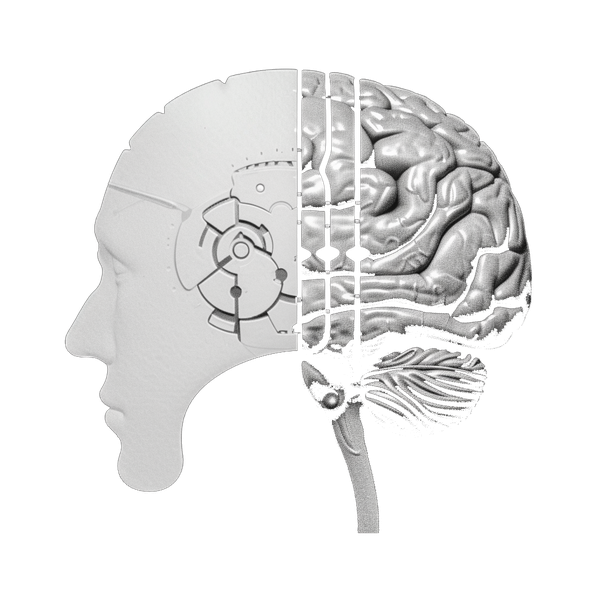

The fusion of immersive realities, such as virtual reality (VR) and augmented reality (AR), with Artificial Intelligence (AI) represents an evolutionary leap in our interaction with technology. This article explores how this combination is transforming various industries and aspects of our daily lives, opening new frontiers of experience, interaction and learning.
Immersive Realities, Doors to New Worlds: VR and AR, by providing immersive experiences, have revolutionised the way we perceive and relate to digital environments. These technologies allow us to immerse ourselves in virtual worlds or to overlay digital information on the real world, offering endless possibilities for entertainment, education and beyond.
Innovations in entertainment and learning through virtual reality (VR) and augmented reality (AR) are ushering in a new era in both industries. In entertainment, immersive video games are revolutionising the way users interact with digital worlds. These experiences, far more engulfing than traditional ones, allow players to immerse themselves completely in virtual environments, providing a sense of presence and participation that was previously unthinkable. In addition, AR is opening new possibilities in entertainment by overlaying virtual elements on the real world, which enriches the user experience and opens the door to innovative forms of play and exploration.
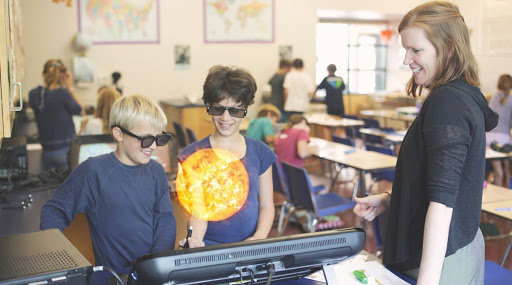
In education, VR and AR are emerging as powerful tools for learning and teaching. These technologies make it possible to create enriched educational experiences that can make complex concepts more accessible and understandable for students. For example, in medicine, students can practise surgery in a safe virtual environment, which lets them learn and hone their skills without risk to patients. Likewise, in primary and secondary education, AR can make learning more interactive and engaging, allowing students to visualise and manipulate virtual objects that represent abstract concepts, which facilitates a deeper understanding and a longer-lasting recall of the educational material. These technologies not only improve the quality of education, but can also make it more accessible to students in different parts of the world, democratising access to high-quality knowledge.
Artificial Intelligence: The Brain Behind the Fusion
AI plays a crucial role in enhancing immersive experiences. By integrating AI, immersive reality applications become more intuitive and responsive, adapting to users’ needs and behaviours. The transformation of interactions and experiences through the integration of Artificial Intelligence (AI) into immersive technologies is redefining what is possible in terms of personalisation and engagement. By analysing and responding to user data, AI can tailor virtual reality (VR) and augmented reality (AR) experiences to meet each individual’s specific needs and preferences. This personalisation translates into more intuitive interactions and more engulfing experiences, which significantly increases the value and relevance of these technologies.
In entertainment, for example, AI can dynamically adjust the content of a game or a VR experience to fit the user’s skill level and interests, thus improving the gaming experience and keeping users engaged for longer. In business and education, AI applications in immersive realities open new avenues for training and learning. For example, training programmes can be customised to focus on the areas where an employee or student needs the most support, thus offering a more effective and efficient learning experience.
In addition, AI in immersive realities can significantly improve accessibility, especially for people with different abilities. Through data analysis and machine learning, these technologies can adapt to offer alternative modes of interaction that are better suited to users with visual, hearing or motor disabilities. This not only extends the reach of these technologies to a wider audience, but also promotes inclusion and equality in access to information and entertainment. The fusion of AI with immersive realities is opening a world of possibilities for personalised and adaptive experiences in various domains. As these technologies continue to evolve, they are expected to further transform the way we work, learn, play and communicate, offering ever richer and more meaningful experiences.

Impact on Industries and Society
The integration of Artificial Intelligence (AI) with immersive realities such as virtual reality (VR) and augmented reality (AR) is significantly transforming various industries, including medicine, architecture and design. In medicine, this technological synergy is revolutionising how doctors are trained and how medical procedures are carried out. The advanced surgical simulations provided by combining VR and AI allow health professionals to practise and hone their skills in a controlled, risk-free environment, thus improving the quality and safety of medical care.
In architecture, the use of VR and AI makes it possible to visualise buildings and spaces not yet built in a detailed and realistic way. Architects and designers can explore and modify their creations in a virtual environment, which facilitates decision-making and experimentation with different designs and materials. This approach not only saves time and resources, but also opens new possibilities for creativity and innovation in architectural design.
Ethical and Practical Challenges These innovations bring ethical and practical challenges, such as data privacy and the digital divide. It is crucial to address these challenges to ensure an equitable and responsible development of these technologies.
Towards an Immersive and Intelligent Future
The fusion of immersive realities, such as virtual reality (VR) and augmented reality (AR), with Artificial Intelligence (AI) is profoundly reshaping our interaction with the world and with one another. This convergence is not just a passing fad in the technology field; it represents a radical change in our everyday experience. With these technologies, the boundary between the physical and the digital blurs, allowing us to experience and manipulate digital environments in ways previously unimaginable. Practical applications range from improving efficiency in the workplace to creating new forms of entertainment and learning, opening up a range of possibilities that previously existed only in science fiction.
However, alongside these exciting opportunities come important challenges and ethical considerations. Managing data privacy and security becomes a primary concern, as these technologies collect and process large amounts of personal information. Furthermore, inclusion and equitable access to these innovations are essential to avoid deepening existing social and economic gaps. It is essential that these tools be developed and deployed in ways that are accessible and beneficial to everyone, not just a privileged few. This equitable and responsible approach will ensure that the benefits of the fusion of immersive realities and AI are widely shared, improving the quality of life and well-being of the population at large.
As we move towards this immersive and intelligent future, we face the challenge and the opportunity of steering these technologies towards a development that is sustainable and ethically responsible. This requires close collaboration among developers, lawmakers, educators and users to ensure that these advances are used in ways that improve our lives without compromising our fundamental values. By tackling these challenges proactively, we can make sure that the fusion of immersive realities with AI not only enriches our immediate experience but also contributes to a fairer, safer and more exciting future for all.
Originally published in Spanish on IANética (2023). English version prepared for TecnoHumanismo.
Related articles
Exploring the Future of Cognitive Computing and Its Social Implications
The future of cognitive computing is a new frontier where AI meets human thinking and learning, redefining how we learn, decide and create.
Read article →4 min
OPEN IANética TRAINING: Artificial Intelligence and Extended Reality in Education 4.0
Open training to promote ethics in artificial intelligence and the Internet of Everything. IANética project of Las Naves.
Read article →4 min
Balancing AI Innovation and Social Responsibility
AI has revolutionised our lives, but it raises ethical and social questions. This article explores the balance between AI innovation and responsibility.
Read article →5 min