Cognitive Transition · Book One
Prologue

“Judgment, unlike talent, can be trained.”
Summary
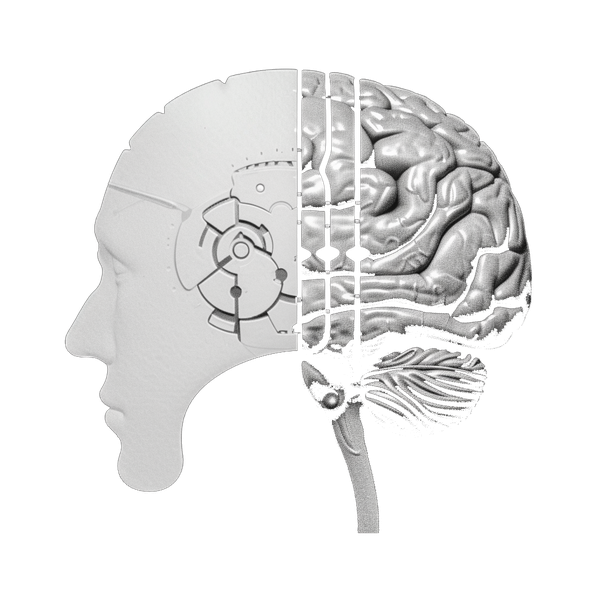
On an ordinary afternoon the model hands you, in twelve seconds, an analysis that would have taken you the whole morning, and the analysis is good. You read it twice, adjust one nuance, and a question arrives that still has no words. The prologue starts from that scene and puts it in its place: the important thing is happening in your head. It changes where your reasoning starts, what your memory keeps, and how much effort you demand before thinking something through yourself. The book calls that subtle, cumulative shift the Cognitive Transition. The prologue also lays out the thesis that organizes everything else, that AI automates tasks and not systems, and the reason judgment has become scarce. It says who the book is for, in what tone and from where it is written, and sketches a route in five parts with one tool per chapter. This is the first volume of The Change Trilogy, and it begins at the scale of the person.
Extended content
Liquid part: this text keeps growing after the printed edition.
Before Chapter 1: write down your afternoon
Take a sheet of paper and write the scene, but yours. What the task was, how long it would have taken you, what you corrected in the result, and what you felt in the seconds afterward. Five lines are enough. If you can't pin that afternoon down, write the closest one from this month.
The exercise looks minor and isn't. The prologue speaks of a question that arrives without words, and as long as it stays wordless it acts on its own. Put on a page, it stops being a mood and becomes data. Keep the page. When you finish the book, read it again and notice which question you were asking back then.
Three shifts you can measure
The prologue points to three small changes: the point where your reasoning starts, what your memory considers worth keeping, and the threshold of effort above which you decide to think for yourself. None of them shows from one day to the next. All three show up in a notebook.
For one week, keep three tallies. A stroke each time you begin a piece of work from someone else's draft. Another each time you skip writing down a fact because "I'll ask for it again later." And on Friday, write down the last thing you thought through from start to finish without asking for help. If you can't find one, you know how far your threshold has risen.
A worked example
Marta is a commercial lawyer, forty-four. She writes down her afternoon: the analysis of the clauses in a distribution contract, which the model delivered while she was pouring a coffee. She read it twice and changed one word. She felt, she notes, relieved and a little cheated, both at once.
When she counts the week's tallies she finds what she didn't expect. She had started from someone else's draft nine times out of ten. And she couldn't recall the notice period in a contract she reviewed on Tuesday: she read it, accepted it, and didn't retain it, because she knew she could ask again. Neither was a mistake. Both were a change in cognitive architecture that nobody had decided.
Her Monday decision was small. On new contracts she will read the original for ten minutes, jot down by hand the two clauses that worry her most, and only then ask for the analysis. With those notes in front of her, she says, the draft stops being the starting point and becomes a second opinion.
The experienced professional's two jobs
The prologue tells the reader that their knowledge is not losing value, then adds the uncomfortable part: an asset no one can see doesn't trade. Two jobs follow from that, exercising judgment and making it visible. For the second there is a half-hour exercise.
Pick a decision from the last month in which your judgment changed the outcome of something a system or a junior colleague had produced. Write down what you caught, what would have happened without it, and who besides you could have known. If the answer to that last one is "no one," you have a visibility problem before you have a judgment problem, and it is better to find out early.
Questions to bring to Chapter 1
- What has changed in the way I start a piece of work since I began using models, and when did I decide it?
- What do I know about my field that is not written anywhere the model can reach?
- Who, besides me, could say that my judgment was in the result?
- Do I treat AI today as an oracle or as a parrot, and which decision of mine this week gives it away?
Where to go next
The prologue promises eleven tools, and the first is the simplest to state: separate what has really changed from what is still in place. That is the work of Chapter 1.
© Pedro Mujica, 2026